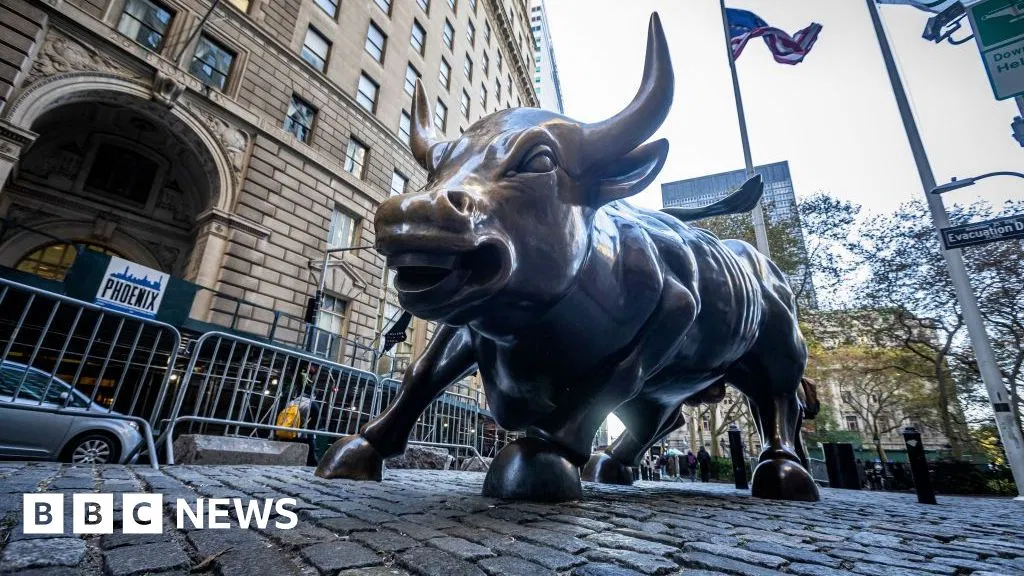
The stock market is in the grip of one of its most dramatic sector rotations in recent memory as artificial intelligence disruption fears trigger a historic sell-off in software and technology stocks. Nearly $1 trillion has been wiped from software and services stocks alone since late January 2026, with the carnage spreading across insurance, real estate, and transportation sectors as investors scramble to determine which industries AI will transform — and which it will render obsolete.
The tech-heavy Nasdaq Composite has been hit hardest, with multiple sessions of sharp declines punctuated by brief rebounds. The S&P 500 software and services index plummeted 4.6% in a single day in early February, its worst drop in years. This isn't just another market correction — it's a fundamental repricing of an entire sector based on the most disruptive technological force since the internet itself.
How the AI Panic Unfolded: Inside the Software Stock Meltdown
The sell-off began in earnest in late January 2026 when Anthropic released a major update to its Claude AI agent, demonstrating capabilities that suggested AI could soon replace many functions traditionally performed by software engineers and enterprise software platforms. The trigger was a "wake-up call" moment, as Reuters described it, that forced investors to confront an uncomfortable question: if AI can write code, manage workflows, and analyze data autonomously, what happens to the $800 billion software industry?
The answer came swiftly. Shares of Salesforce, Adobe, ServiceNow, and IBM were hammered. Even companies reporting good earnings weren't spared. As Forbes reported, "AI Fears Keep Hammering Software Stocks—Even Those Reporting Good Earnings." The iShares Expanded Tech-Software Sector ETF plunged 27% from its highs in the months following the sell-off's onset.
By April 2026, the sell-off deepened when IBM and ServiceNow earnings reignited fears. Reuters noted a "deepening US tech divide" as AI infrastructure plays like Nvidia and Broadcom recovered, while traditional software names continued to bleed.

Timeline: The Key Moments That Triggered the Tech Rout
Late January 2026: Anthropic releases a major Claude AI update showcasing autonomous coding and workflow management capabilities. Software stocks begin their descent.
February 4, 2026: The sell-off accelerates. Nearly $1 trillion erased from software and services stocks in a single week. The S&P 500 software index drops 4.6%. Palantir, Super Micro Computer lead the decline.
February 12, 2026: The Dow Jones Industrial Average sheds 670 points as tech sell-off intensifies. Apple and AppLovin shares drop sharply. AI concerns resurface with full force.
February 27, 2026: The S&P 500 and Nasdaq log their steepest monthly declines since March 2025. Combined AI and tariff fears rattle global markets.
April 23, 2026: IBM and ServiceNow earnings reignite AI disruption fears. Software ETF plunges another 6% in a single day. The sell-off now exceeds 27% from peak.
June 5-8, 2026: BBC reports "US stocks slump as fears over Big Tech shake Wall Street." The Guardian notes markets continue to fall as AI concerns persist, compounded by geopolitical tensions between Iran and Israel affecting oil prices.
Why This Sell-Off Is Different: Expert Analysis and What It Means for Your Portfolio
According to a Business Insider report, an "AI Panic" has spread well beyond software, wiping out over $2 trillion in market capitalization across software, insurance, wealth management, real estate, and trucking industries. "Investors are betting that almost every tech company would come out a winner," Fortune noted in a February 2026 analysis. Now, they're realizing that might not be the case.
The key distinction between this sell-off and previous tech corrections is that it's sector-specific within technology itself. AI infrastructure companies like Nvidia (up 880% in 3 years) and Broadcom have held up relatively well. But traditional software companies — the ones that powered the last decade's market returns — are being repriced for a world where AI eats their lunch.
Investopedia reported that some stock-market experts remain unphased. "The Tech Stock Sell-Off Isn't Worrying Some Stock-Market Experts," the outlet noted, while simultaneously raising the question, "Is a 'Bubble' About to Pop?" The answer may depend on which part of the tech sector you're invested in.
Data from Morningstar shows the software sell-off represents a genuine existential reassessment. Software companies that once commanded premium valuations for their recurring revenue models are now being valued as potential AI disruption victims. The irony is that many of these same companies are aggressively integrating AI into their products — but the market is questioning whether that's enough.
Where Things Stand Now: Latest on the AI-Driven Sell-Off
As of June 2026, the sell-off continues but in a more measured fashion. BBC News reported that US stocks suffered another sharp drop in early June, with the tech-heavy Nasdaq experiencing its biggest one-day decline since early 2025. The Guardian noted that "stock markets fall as concerns persist over tech firms at heart of AI boom," adding that geopolitical tensions between Iran and Israel are compounding market uncertainty.
April 2026 brought a fresh wave of selling when IBM and ServiceNow earnings disappointed investors hoping for clearer AI monetization strategies. The AI divide is now clearly visible: companies selling AI infrastructure (chips, data centers, cloud capacity) are thriving, while companies selling traditional software subscriptions are being crushed.
Fortune's June 2026 analysis quoted a top analyst warning that "the bubble is popping" as investors and Wall Street are "out over their skis" on AI enthusiasm that may not translate to broad-based earnings growth. The analyst noted that while S&P 500 EPS is expected to grow 14.2% in 2026, these gains are concentrated in a narrow set of AI infrastructure beneficiaries.
What Happens Next: The Road Ahead for Tech Investors
The trillion-dollar question — literally — is whether this sell-off represents a buying opportunity or the beginning of a more profound structural shift. Traditional valuation metrics may no longer apply to software companies whose very business models face existential questions from AI.
Some analysts argue the sell-off is overdone, pointing out that software companies have survived previous technological disruptions (cloud, mobile, open-source) by adapting. The FT editorial board suggested "the great software stock meltdown may be overdone, but companies need to move faster to respond to AI."
Others warn that this time is different. AI doesn't just compete with software companies — it threatens to eliminate the need for much of their functionality. When AI agents can generate code, manage customer relationships, and automate business processes autonomously, the value proposition of traditional software-as-a-service becomes harder to defend.
For investors, the path forward requires careful sector selection within technology. AI infrastructure, semiconductor, and data center plays continue to benefit. But for software-focused portfolios, diversification into AI beneficiaries and a hard look at exposure to legacy software names may be warranted.
The Bottom Line: Key Points to Remember
- Nearly $1 trillion was wiped from software stocks in early 2026, with the sell-off expanding to other sectors
- AI disruption is the core driver — investors fear AI will replace traditional software rather than enhance it
- The divide is growing between AI infrastructure winners (Nvidia, Broadcom) and traditional software losers (Salesforce, Adobe, ServiceNow)
- Market volatility is likely to continue as earnings season reveals which companies are successfully adapting to AI
- Valuation reassessment is still underway — traditional software multiples may face permanent compression