Cerebras Systems, the artificial intelligence chipmaker known for building the world's largest processor, made its highly anticipated debut on the Nasdaq on Thursday, pricing its initial public offering at $185 per share — well above its already-upwardly revised range. The IPO raised $5.55 billion and gives the company a fully diluted valuation of approximately $56.4 billion, making it the largest stock market debut of 2026 so far.
The Sunnyvale, California-based company sold 30 million shares of Class A common stock, with underwriters holding a 30-day option to purchase up to an additional 4.5 million shares. Shares began trading under the ticker symbol "CBRS" on the Nasdaq Global Select Market. The pricing landed well above the company's most recent range of $150 to $160 per share, which itself had been bumped up from an initial $115 to $125 range just days prior.
Inside the Cerebras IPO: How the Biggest AI Listing of 2026 Came Together
Cerebras' road to the public markets has been anything but straightforward. The company first filed for an IPO in September 2024 but withdrew those plans last year amid challenging market conditions and a national security review tied to its concentration of AI computing power. The company refiled its S-1 registration statement with the SEC on April 17, 2026, and quickly accelerated toward a listing as investor enthusiasm for AI infrastructure companies reached a fever pitch.
The offering was led by a powerhouse group of underwriters including Morgan Stanley, Citigroup, Barclays, and UBS Investment Bank, with Mizuho and TD Cowen serving as bookrunners. The strong demand reflects Wall Street's appetite for AI infrastructure plays, particularly those that offer an alternative to Nvidia's dominant GPU architecture. Cerebras reported $510 million in revenue for full-year 2025, a 76% increase from $290.3 million the prior year, though the company still posted an operating loss of $146 million.
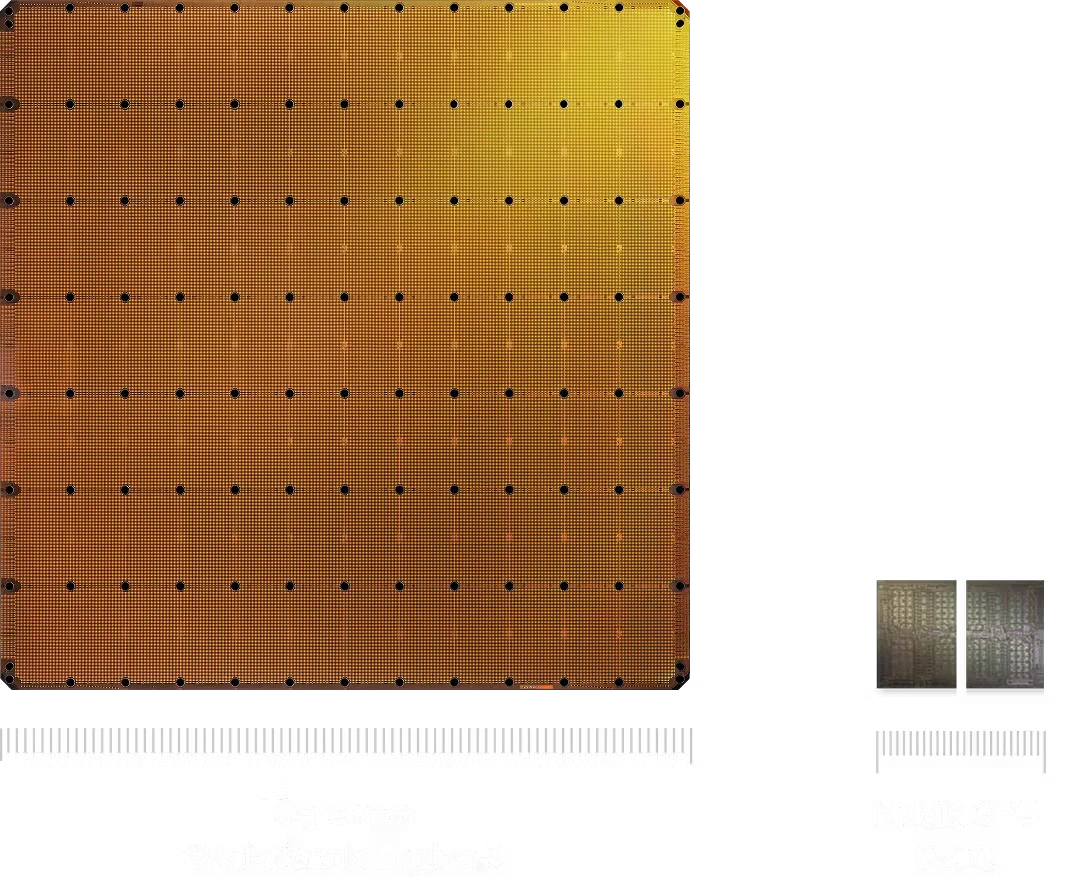
"Cerebras is building the fastest AI infrastructure in the world," the company states in its filings. Its flagship technology, the Wafer-Scale Engine 3 (WSE-3), is 58 times larger than a leading GPU chip and delivers what the company claims is inference up to 15 times faster than leading GPU-based solutions.
Timeline: Cerebras' Path From Startup to Public Company
2016 — Cerebras Systems is founded in Sunnyvale, California by a team of computer architects and AI researchers with a radical vision: build AI chips using entire silicon wafers rather than cutting them into individual dies.
2019 — The company unveils its first-generation Wafer-Scale Engine (WSE-1), the largest chip ever built at the time, containing 1.2 trillion transistors.
2021 — Cerebras launches the WSE-2, doubling transistor count and performance, and begins scaling customer deployments with governments and research institutions.
March 2024 — Cerebras announces the WSE-3, built on a 5nm process, featuring 4 trillion transistors, 900,000 AI-optimized cores, and 125 petaflops of AI compute. Time magazine names it one of the Best Inventions of 2024.
September 2024 — Cerebras files its first S-1 registration confidentially with the SEC, signaling intentions to go public. The IPO is later postponed amid market volatility and regulatory review.
April 17, 2026 — Cerebras files a new public S-1 registration statement, announcing plans to list on Nasdaq under the ticker CBRS. Terms are not initially disclosed.
May 11, 2026 — Cerebras bumps its IPO price range to $150-$160 per share, up from the initial $115-$125 range, reflecting surging investor demand.
May 13, 2026 — Cerebras prices its IPO at $185 per share, above the raised range, raising $5.55 billion. The company is valued at approximately $56.4 billion on a fully diluted basis.
May 14, 2026 — Shares begin trading on the Nasdaq under CBRS in what becomes the largest IPO of 2026.
Why Cerebras Matters: What the Wafer-Scale Architecture Means for AI Investing
Cerebras represents a fundamentally different approach to AI computing than the GPU-based paradigm championed by Nvidia. Instead of linking thousands of smaller chips together, Cerebras builds one enormous processor on a single silicon wafer — the WSE-3 measures 46,225 mm² and contains 4 trillion transistors, giving it 19 times more transistors and 28 times more compute than Nvidia's B200 chip.
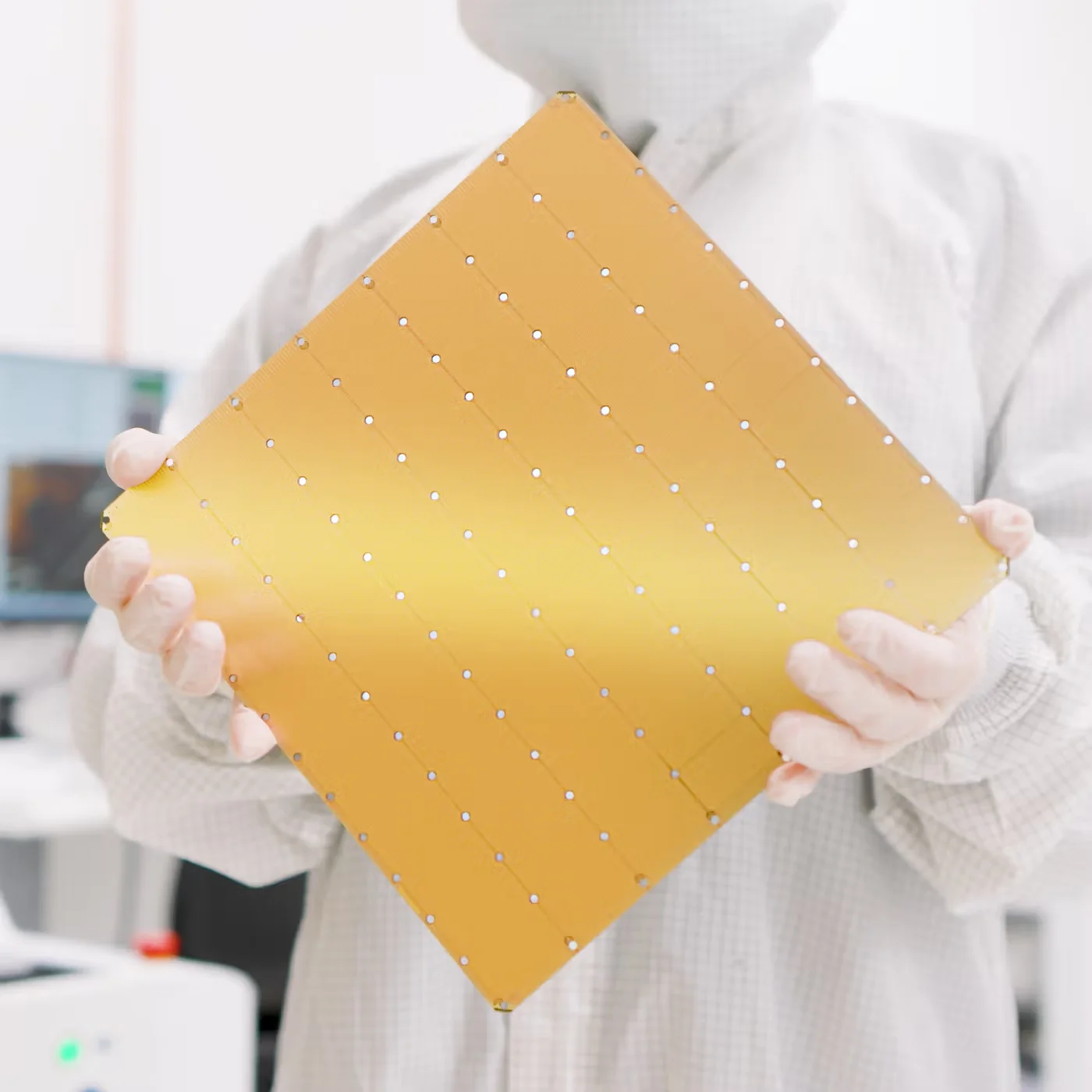
This wafer-scale design offers several advantages that have caught the attention of institutional investors. Because all cores are on a single chip, internal communication is dramatically faster than systems linking thousands of separate GPUs. The chip also includes 44GB of on-chip SRAM memory with massive bandwidth, reducing the need for slower external memory access that often bottlenecks AI workloads.
"The biggest breakthrough in semiconductor technology in decades," is how ARK Invest has described Cerebras' wafer-scale approach on its podcast with CEO Andrew Feldman. The company has built a customer base spanning four continents, including leading corporations, research institutes, and governments running AI workloads both on-premises and through Cerebras' cloud offering.
From an investment perspective, Cerebras enters the public markets at a time when AI infrastructure spending is surging. However, the company's valuation of roughly 110 times 2025 revenue has drawn comparisons to some of the most richly valued tech IPOs in history, and the company has yet to turn a profit. Investors will be watching closely to see if Cerebras can translate its technological edge into sustainable profitability and market share gains against Nvidia's entrenched ecosystem.
Where Things Stand Now: CBRS Stock Begins Trading
Cerebras shares opened for trading on Thursday morning with the broader market watching closely. The company's listing arrives during a period of intense AI mania on Wall Street, with investors eager for new ways to gain exposure to the AI infrastructure buildout beyond the usual suspects like Nvidia and AMD. Pre-IPO trading in perpetual futures contracts had already indicated strong demand, with some contracts trading at levels suggesting a significant first-day pop.
The offering gives Cerebras substantial capital to invest in expanding its manufacturing capacity, research and development, and sales operations. With $5.55 billion in fresh capital — and potentially more if underwriters exercise their option — the company is well-positioned to scale its wafer-scale manufacturing and compete more aggressively for enterprise AI workloads.
Morgan Stanley, Citigroup, Barclays, and UBS led the offering, with additional support from Mizuho, TD Cowen, Needham & Company, Craig-Hallum, Wedbush Securities, Rosenblatt, Academy Securities, Credit Agricole CIB, MUFG, and First Citizens Capital Securities.
What Happens Next: The Road Ahead for Cerebras Investors
Looking forward, Cerebras faces both enormous opportunity and formidable challenges. The AI chip market is projected to grow exponentially over the next decade, and Cerebras' differentiated wafer-scale architecture gives it a unique value proposition for certain AI workloads — particularly training large language models and running inference at scale. The company's technology has already been validated by customers including major corporations and government agencies.
However, Nvidia's CUDA ecosystem remains deeply entrenched, and the company continues to release new generations of high-performance GPUs at a rapid pace. Cerebras will need to demonstrate that its approach can win meaningful market share while also improving its path to profitability. The $510 million in revenue with a $146 million operating loss leaves room for margin expansion, but investors will be looking for evidence that the company can scale efficiently.
Key Takeaways from the Cerebras IPO
- Cerebras priced its IPO at $185 per share, raising $5.55 billion — the largest IPO of 2026
- The company began trading on Nasdaq on May 14 under the ticker CBRS with a ~$56.4 billion valuation
- 2025 revenue hit $510 million, up 76% year-over-year, though the company remains unprofitable
- The WSE-3 chip is the world's largest processor with 4 trillion transistors on a single silicon wafer
- Lead underwriters include Morgan Stanley, Citigroup, Barclays, and UBS Investment Bank
- The IPO represents Cerebras' second attempt at going public after withdrawing a 2024 filing