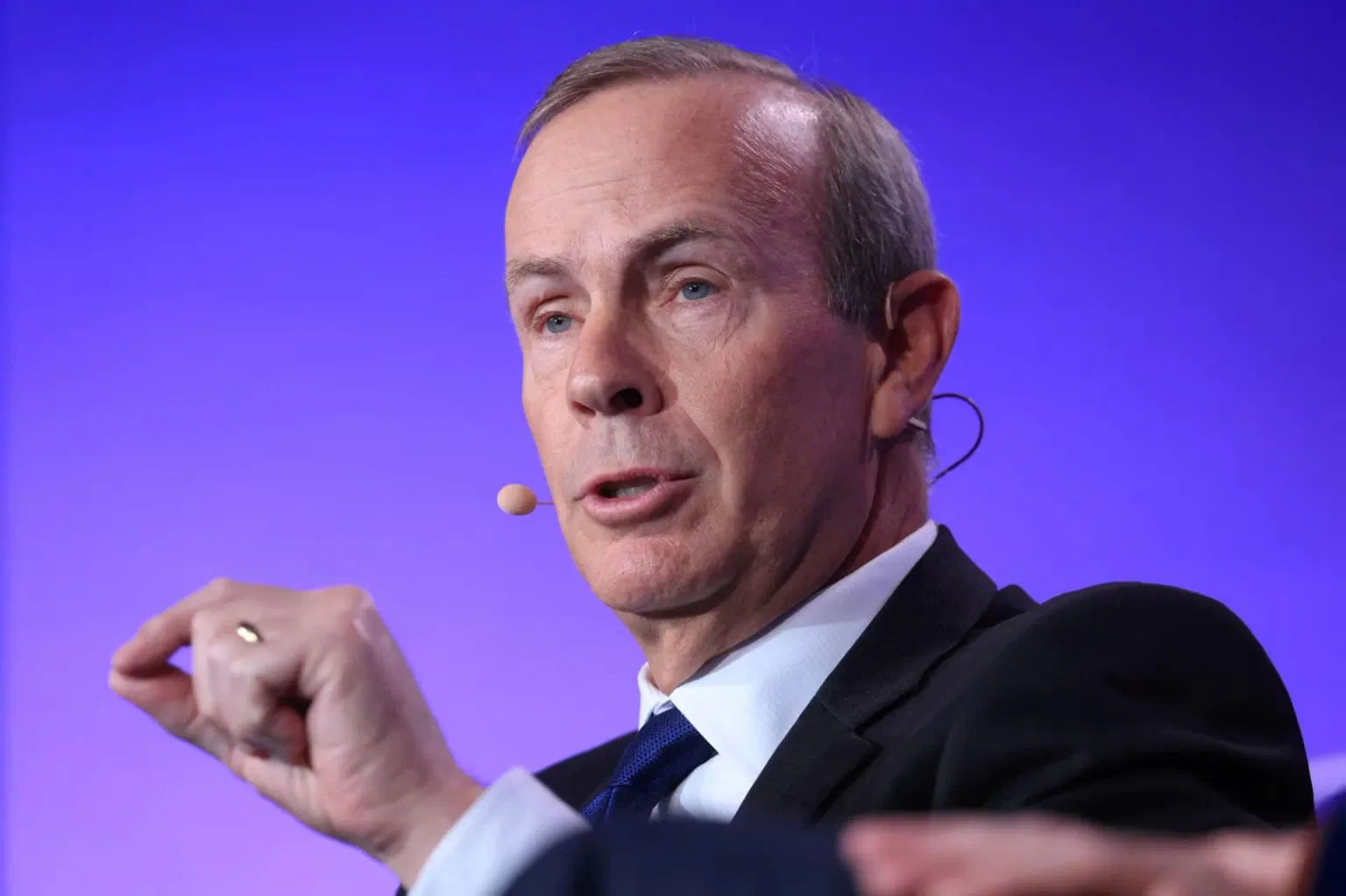
Chevron Corporation sent shockwaves through energy markets this week with a dual announcement that signals a major strategic shift for America's second-largest oil producer. The company revealed plans to slash 2025 capital expenditures by $2 billion while booking up to $1.5 billion in fourth-quarter restructuring charges, a move that immediately put CVX stock in the spotlight for investors evaluating the energy sector's direction. As crude oil prices continue their volatile dance between geopolitical tensions and demand concerns, Chevron's decision to prioritize capital discipline over aggressive growth marks a significant pivot with implications far beyond its San Ramon headquarters.
The $2 Billion Shift: Inside Chevron's Capital Discipline Strategy
On December 5, 2024, Chevron announced an organic capital expenditure range of $14.5 to $15.5 billion for consolidated subsidiaries, plus an affiliate capital expenditure range of $1.7 to $2.0 billion for 2025. This represents a substantial $2 billion reduction from approximately $19 billion in projected 2024 spending. "The 2025 capital budget along with our announced structural cost reductions demonstrate our commitment to cost and capital discipline," declared Chevron Chairman and CEO Mike Wirth in the official release.
The breakdown reveals strategic priorities: about $13 billion allocated to upstream spending, with roughly two-thirds directed toward developing Chevron's U.S. portfolio. Permian Basin investment will drop to between $4.5 and $5.0 billion as the company shifts from production growth to free cash flow optimization. Meanwhile, downstream capex is expected at approximately $1.2 billion, with about $1.5 billion dedicated to lowering carbon intensity and growing New Energies businesses.
Restructuring Reality: The $1.5 Billion Charge and Job Cuts
Simultaneously, Chevron disclosed it will take up to $1.5 billion in fourth-quarter charges for restructuring, asset impairments, and property sales. The breakdown includes $700-$900 million in after-tax restructuring charges for severance pay and relocations, with cash outflows expected over the next two years. An additional $400-$600 million in non-cash, after-tax charges relate to impairments, asset sales, and other obligations.
These charges connect to Chevron's previously announced goal of achieving $2-$3 billion in structural cost reductions by the end of 2026. The company hasn't specified exact job cut numbers among its 45,000 employees, but the magnitude of charges suggests significant workforce adjustments. This marks the latest in a series of annual charges for Chevron, following a $3.7 billion impairment in 2023, $1.1 billion in 2022, and $4.8 billion in 2020.
Timeline: How Chevron's Strategic Pivot Unfolded
The sequence of events reveals a carefully orchestrated strategic shift. On December 5, Chevron released both the 2025 capex budget and restructuring charge announcement during market hours. The following day, December 6, CEO Michael Wirth appeared at an Atlantic Council event where he addressed Venezuela operations and strategic petroleum reserve policy while emphasizing the company's commitment to capital discipline.
Market reaction was initially muted, with CVX stock trading around $156—representing a 10% gain over the past year but significantly underperforming both the S&P 500's 31% rise and Exxon Mobil's 14% increase over the same period. The timing coincides with ongoing challenges to Chevron's $53 billion Hess acquisition, which faces arbitration proceedings over preemptive rights in Guyana's Stabroek Block.
Why Chevron Stock Has Underperformed: The Hess Deal Dilemma
Chevron's relatively poor stock performance compared to peers stems largely from investor concerns surrounding the pending Hess acquisition. The deal, announced in October 2023, would give Chevron 465,000 acres in the Bakken Shale and substantial production in Guyana. However, Exxon Mobil and CNOOC—Hess's partners in the Guyana venture—assert preemptive rights that could block or significantly alter the transaction.
"The possible snag to Chevron's acquisition plans relates to Hess and Exxon being partners in a large energy project in Guyana, and XOM believes it has the right to buy Hess out of the project if it sells itself to Chevron," notes Trefis analysis from December 12. This uncertainty has created what analysts call "stock specific risk" that has weighed on CVX shares despite otherwise solid operational performance.
Current Reality: Where Chevron Stands Today
As of early December 2024, Chevron stock trades around $156 per share with a market capitalization of $311.7 billion. The company offers a 4.49% dividend yield—one of the more attractive in the energy sector—and maintains a price-to-earnings ratio of 19.83. Production remains robust at 3.36 million oil-equivalent barrels per day in Q3 2024, representing 7% year-over-year growth driven by record Permian Basin output and the PDC Energy acquisition.
Financial performance shows mixed signals: Q3 2024 net income came in at $4.49 billion ($2.48 per share), down 31% from $6.53 billion ($3.48 per share) in the year-ago quarter. Revenue declined 6% year-over-year to $50.67 billion, though this beat market expectations. The company continues to navigate lower crude oil prices and reduced refining margins while maintaining one of the strongest balance sheets in the industry.
The Road Ahead: 2025 Predictions and Investment Implications
Looking forward, Chevron's strategic shift carries significant implications for investors. The $2 billion capex reduction should boost free cash flow, potentially supporting dividend increases or share buybacks. Trefis forecasts 2024 EPS of $10.41 and values Chevron at $161 per share based on a 15.5x P/E multiple—representing modest upside from current levels.
Several key factors will determine Chevron's 2025 trajectory: resolution of the Hess acquisition impasse, execution of cost reduction targets, oil price stability, and successful integration of recent asset sales. The company's focus on capital discipline aligns with broader industry trends toward shareholder returns over production growth, potentially making CVX more attractive to income-focused investors.
CEO Wirth's comments on December 6 about Venezuela policy also highlight geopolitical considerations. With Chevron as the only U.S. oil producer operating in Venezuela's oilfields, any shifts in U.S. sanctions policy under the incoming administration could impact production and revenue streams.
The Bottom Line: Key Takeaways for CVX Stock Investors
Chevron's announcements represent a fundamental shift toward capital discipline and operational efficiency. For investors, several critical points emerge: The $2 billion capex cut should enhance free cash flow and dividend security. The $1.5 billion restructuring charge, while painful short-term, aims for sustainable cost reductions. Hess acquisition uncertainty remains the largest overhang on CVX stock. The 4.49% dividend yield provides downside protection amid market volatility. And finally, Chevron's underperformance versus peers creates potential value opportunity if the Hess deal resolves favorably and cost reductions materialize as planned.
As energy markets evolve toward greater efficiency and shareholder returns, Chevron's strategic pivot positions the company to weather commodity price volatility while rewarding patient investors. The coming months will reveal whether this discipline translates into the stock performance improvement that has eluded CVX shareholders throughout much of 2024.