The Federal Reserve held interest rates steady at its April 28–29 meeting, maintaining the federal funds rate at 3.50%–3.75% for the third consecutive time this year. But beneath the surface of the widely expected decision, the meeting was anything but routine. The Federal Open Market Committee (FOMC) recorded four dissents — the highest level of internal division since 1992 — and Chair Jerome Powell presided over what is almost certainly his final meeting as the head of the central bank.
The decision to hold rates comes as the central bank confronts a difficult trifecta: rising inflation fueled by surging energy prices from the Iran conflict, a lackluster labor market, and a historic leadership transition. For investors, the April FOMC meeting offered crucial signals about where rates — and the economy — are headed next.
Historic Dissent: Inside the Divided FOMC Vote
The 11-1 vote to hold rates steady masks a deeper fracture within the committee. Fed Governor Stephen Miran dissented in favor of a 25-basis-point cut, arguing the economy needs more stimulus. In a separate but equally significant break, three other members — Cleveland Fed President Beth Hammack, Minneapolis Fed President Neel Kashkari, and Dallas Fed President Lorie Logan — dissented because they opposed the inclusion of language in the statement that showed a bias toward eventual easing.
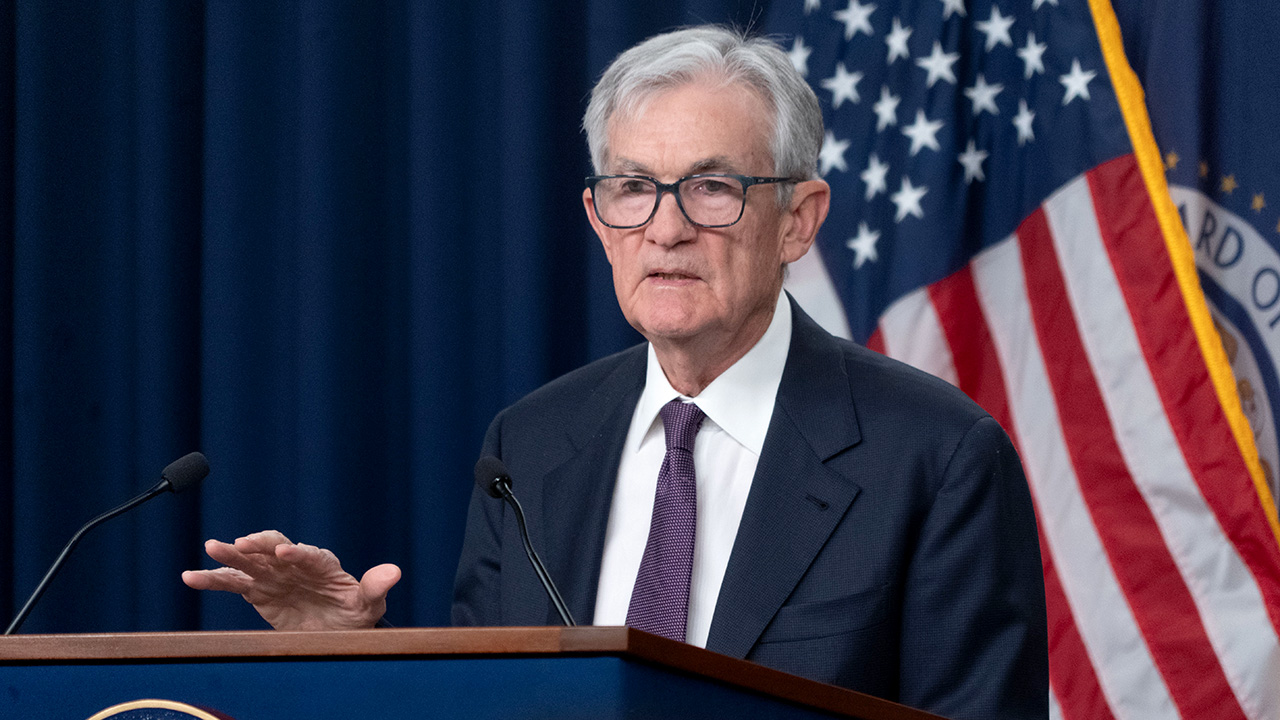
With four total dissents, the April meeting saw more internal disagreement than any FOMC gathering in over three decades. Chair Powell acknowledged the division during his press conference, calling it a natural reflection of the "extraordinarily challenging set of supply shocks" the economy has faced: the pandemic, the Ukraine war, tariffs, and now the Iran conflict and oil spike.
"The right thing to do is to try to balance the achievement of those two goals," Powell said, referring to the Fed's dual mandate of maximum employment and stable prices. "It's only natural that you have a range of views on the committee."
Timeline: How We Got Here — The Fed's 2026 Policy Pivot
The April decision marks the end of a dramatic policy transition. After cutting rates aggressively in the second half of 2025 — delivering three successive 25-basis-point cuts in September, October, and December — the Fed hit the pause button in 2026 as inflation reaccelerated.
- September 2025: First rate cut of the easing cycle (25bps)
- October 2025: Second consecutive cut (25bps)
- December 2025: Third cut brings rate to 3.50%-3.75%
- January 2026: First pause — rates held steady
- March 2026: Second consecutive pause
- April 28-29, 2026: Third pause — highest dissent since 1992
Oil prices surged more than 60% from late February, following the outbreak of hostilities in the Middle East. That energy shock pushed the Consumer Price Index to 3.3% in March — the highest reading since May 2024 and well above the Fed's 2% target. Core PCE inflation, the Fed's preferred gauge, stood at 3.0% as of February.
Powell's Final Act: Defending the Fed's Independence
The April meeting was Powell's last as Fed Chair — his term expires on May 15. But in a notable development, Powell announced he will not leave the Federal Reserve Board entirely. He plans to stay on as a governor until the Justice Department's criminal investigation into his testimony about the renovation of the Fed's headquarters is "well and truly over with finality and transparency."
U.S. Attorney Jeanine Pirro announced the closure of the investigation on the Friday before the meeting. However, Powell expressed lingering concerns, noting she "would not hesitate to restart the investigation." The Justice Department later provided assurances that the probe would not be reopened without a criminal referral from the Fed's inspector general.
"My concern is really about the series of illegal attacks on the Fed which threaten our ability to conduct monetary policy without considering political factors," Powell said. "These legal actions by the administration are unprecedented in our 113-year history."
Kevin Warsh, President Trump's nominee to succeed Powell, advanced out of the Senate Banking Committee on the day of the April FOMC decision. He is expected to be confirmed in time for the June FOMC meeting. Warsh has signaled support for lower interest rates and a smaller Fed balance sheet, but analysts caution that a divided committee will limit any immediate policy shifts.
What This Means for Investors: Rates, Stocks, and Bonds
The interest rate outlook has shifted dramatically since the start of 2026. At the beginning of the year, markets priced in two to three rate cuts. Today, most economists expect at most one cut — penciled in for September or December — and some, like Moody's Analytics chief economist Mark Zandi, believe the Fed won't cut at all this year.
"They're stuck in place," Zandi said. "They don't know how to respond because of all the uncertainty with how things are playing out."
MUFG Research, which initially forecast multiple cuts, has scaled back to expect just one, noting that "an increasingly divided Fed, that will see new leadership at the June FOMC meeting, makes it difficult" to predict further easing. However, MUFG also noted that incoming Chair Warsh could use the Jackson Hole symposium to make the case for lower rates, potentially pricing cuts back into the September and December meetings.
The U.S. Bank Asset Management Group maintains a "constructive outlook" for diversified portfolios, seeing opportunities in globally diversified stocks, global infrastructure, and structured credit. Treasury yields rose on the day of the decision, with 2-year yields climbing 0.10% and 10-year yields rising 0.08%, as investors absorbed the reality of a higher-for-longer rate environment.
For equity investors, the picture is mixed. Large-cap stocks (S&P 500) held flat on the day of the announcement, while small-cap stocks (Russell 2000) fell 0.6%, reflecting greater sensitivity to interest rates. The longer rates stay above neutral, the more pressure they put on small-to-midsized firms, housing, and other rate-sensitive sectors.
Where Things Stand Now: The Path Forward
The current rate of 3.50%-3.75% is restrictive — meaning it's designed to slow economic activity. But with oil prices still elevated and no end in sight to the Iran conflict, the Fed is effectively handcuffed. Cutting rates could reignite inflation, but keeping rates high risks further weakening the job market and slowing growth.
Powell acknowledged the dilemma directly: "In the textbook, you would look through an oil shock because they tend to be short-lived. But the question about looking through energy really is not in front of us right now — it hasn't even peaked yet."
Goldman Sachs economists continue to expect one rate cut in December 2026. EY-Parthenon scaled back from two cuts to one. The Fed's March Summary of Economic Projections showed median inflation projections ticking slightly higher, though longer-term inflation expectations remain anchored.
Ellen Zentner, chief economic strategist at Morgan Stanley Wealth Management, summed up the situation: "Jerome Powell sounded consistently cautious after his last FOMC meeting as Fed chairman. The current backdrop of firm economic growth, sticky inflation, and a stable jobs market doesn't justify lower rates."
What Happens Next: Key Dates and Scenarios
Several factors will determine the rate path for the rest of 2026:
- May 15: Powell's term as Chair expires; Kevin Warsh expected to be confirmed shortly after
- June 17-18: Next FOMC meeting — first with Warsh as Chair
- Late August: Jackson Hole symposium — potential venue for Warsh to signal policy direction
- September 16-17: FOMC meeting — first realistic opportunity for a rate cut
- December 8-9: Final FOMC meeting of 2026 — second potential cut window
Key variables include the trajectory of oil prices, the evolution of the Iran conflict, the pace of disinflation in core services, and labor market data. If energy prices stabilize and begin to decline, the Fed could find room to ease. If they continue to rise, the current pause could extend well into 2027.
The Bottom Line: Key Points to Remember
- The Fed held rates at 3.50%-3.75% in April — third straight pause after three cuts in late 2025
- Four FOMC members dissented, the most since 1992, signaling deep division over the path forward
- This was Powell's final meeting as Chair; Kevin Warsh is expected to take over for the June meeting
- Inflation at 3.3% (CPI) remains well above the 2% target, driven by a 60% surge in oil prices
- Most economists expect at most one rate cut in 2026, likely in September or December
- For investors, a higher-for-longer rate environment favors diversified portfolios and selective exposure to growth assets