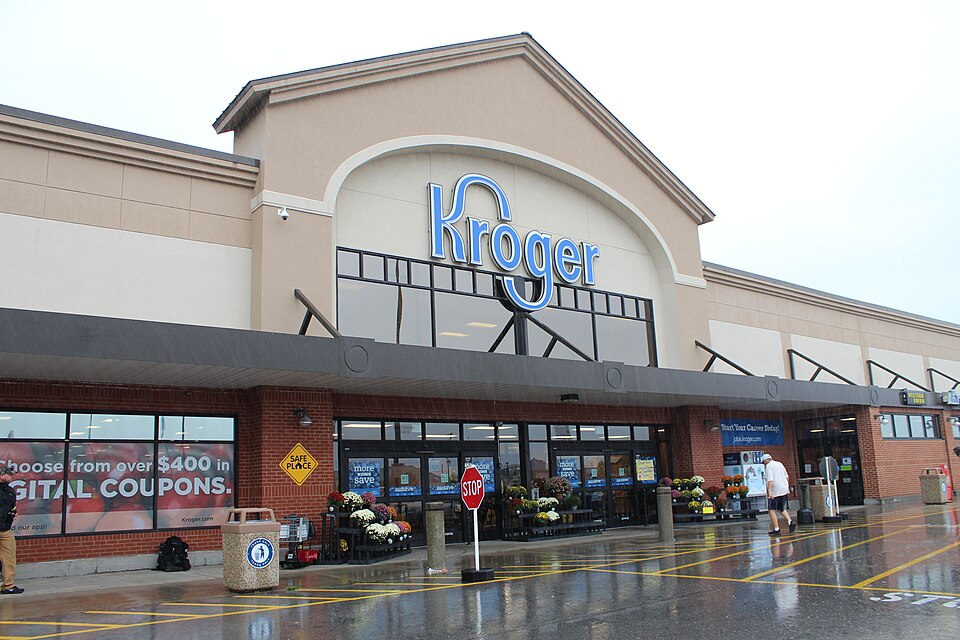
Kroger (NYSE: KR) is pressing ahead with a plan to close roughly 60 underperforming stores by the end of 2026 — including six Harris Teeter locations across Virginia, Maryland and North Carolina — a restructuring that is reframing how Wall Street reads the nation's largest traditional grocery chain. The closures, first disclosed in 2025, are part of what Kroger has described as an optimization strategy that carries a $100 million impairment charge but is expected to deliver a "modest financial benefit" while redirecting capital toward the company's core growth priorities. For investors, the story is bigger than empty storefronts: it is a window into how Kroger is repositioning itself after regulators killed its $24.6 billion Albertsons merger — and how management plans to deploy its balance sheet next.
Inside Kroger's 60-Store Reset
According to a USA TODAY analysis drawing on reporting from Grocery Dive, Fast Company and MassLive, Kroger has already shuttered more than 35 of the planned 60 locations, leaving just over 20 still to close. The cuts span nearly every banner in Kroger's portfolio — Kroger, Fred Meyer, Fry's Food and Drug, King Soopers, Mariano's, Pick 'n Save, QFC, Jay C Food Stores and Food 4 Less — and touch at least 15 states, including Texas, Virginia and Wisconsin.
Harris Teeter, the upscale Southeast chain Kroger acquired in 2014 for $2.5 billion, accounts for six of the reported closures: two stores in Arlington, Virginia, one in McLean, Virginia, one in Rockville, Maryland, and single locations in Charlotte and Raleigh, North Carolina. Kroger has said it expects a "modest financial benefit" from the moves and will offer affected associates roles at other stores. The company declined to provide additional details to USA TODAY when reached for comment.
Timeline: From Blocked Merger to Store Closures
The 2026 closures did not happen in a vacuum. They follow a sequence of events that has fundamentally reshaped Kroger's strategy:
- October 2022: Kroger announces a $24.6 billion agreement to acquire rival Albertsons, betting on scale to compete with Walmart and Amazon.
- December 2024: Federal judges block the merger, ruling it would harm consumers and workers.
- 2025: Kroger discloses plans to close roughly 60 underperforming locations by the end of 2026.
- November 2025: Kroger announces it will close distribution facilities in Groveland, Florida, Pleasant Prairie, Wisconsin, and Frederick, Maryland — ending its delivery service in Florida.
- December 2025: Kroger unveils a $391 million distribution center in Franklin, Kentucky, expected to create about 430 jobs.
- July 1, 2026: Kroger announces a $1.65 billion agreement to acquire Giant Eagle, a regional grocer with about $9 billion in annual sales.
- August 2026: Kroger has closed more than 35 of the 60 planned stores, with the remainder expected to follow by year-end.
What the Closures Mean for Kroger's Bottom Line
Kroger remains an enormous business: it generated about $147.1 billion in revenue and $2.665 billion in net income in fiscal 2025, and Berkshire Hathaway has built an 8.09% stake in the company. But grocery is a notoriously thin-margin business, and every underperforming store drags on returns. The $100 million impairment charge tied to the 2026 restructuring is a short-term cost Kroger is willing to absorb for longer-term efficiency.
Management has framed the closures as a reallocation of capital — taking cash that was funding unprofitable locations and reinvesting it in customer experience, pricing and higher-return markets. The Giant Eagle deal is the clearest example of where that capital is headed. Kroger will pay $1.65 billion — $1.25 billion in cash plus about $400 million in assumed liabilities — for 197 supermarkets and 11 standalone pharmacies across northern Ohio, western Pennsylvania, West Virginia, Maryland and Indiana.
"Giant Eagle is a well-run, high-quality regional grocer with a strong reputation for fresh products, pharmacy, private label and customer loyalty," CEO Greg Foran said when the deal was announced. "The strategic fit is clear. Giant Eagle expands our reach into attractive adjacent markets."
Kroger says the acquisition will be accretive to adjusted earnings per share in the second full year after closing, expected in 2027, and that it can fund the deal with cash while keeping its net total debt to adjusted EBITDA in its 2.3–2.5x target range. Management also expects to maintain its dividend and continue a previously announced $2 billion share repurchase program — signals aimed squarely at income and value investors.
Still, the risks are real. Kroger's merger-driven consolidation strategy is now off the table, forcing it to grow organically and through smaller deals like Giant Eagle. At the same time, Walmart, Costco and discounters such as Aldi continue to pressure grocery prices, while labor costs and food inflation squeeze margins. For Kroger and its peers — including Albertsons, which has separately been closing Safeway locations — 2026 is shaping up as a year of trimming to protect profitability.
Where Kroger Stands Today
As of mid-August 2026, Kroger had completed more than half of its 60-store closure plan, with locations already shut in markets ranging from Atlanta and Houston to Milwaukee and Seattle. The company has declined to provide additional detail beyond its earlier guidance, but the pattern is consistent: exit weak or cannibalized locations, consolidate where possible, and preserve share in markets where Kroger leads. The distribution-network changes tell the same story — exiting costly Florida delivery while adding a new $391 million hub in Kentucky.
What Happens Next
Investors should watch three things through the rest of 2026 and into 2027. First, whether Kroger hits its year-end target of 60 closures without further one-time charges. Second, the regulatory path for the Giant Eagle acquisition, which Kroger expects to include limited store divestitures before a 2027 close. Third, Kroger's identical-store sales and margins in upcoming quarters — the clearest test of whether the optimization strategy is actually strengthening the underlying business or simply shrinking it.
Key Takeaways
- Kroger is closing roughly 60 stores in 2026, including six Harris Teeter locations, as part of a $100 million restructuring.
- The closures follow the December 2024 court rulings that blocked Kroger's $24.6 billion merger with Albertsons.
- Kroger is redeploying capital toward growth, led by its $1.65 billion Giant Eagle acquisition expected to close in 2027.
- Kroger posted about $147 billion in 2025 revenue and $2.665 billion in net income; Berkshire Hathaway holds an 8.09% stake.
- Key risks include thin grocery margins, intense competition from Walmart, Costco and Aldi, and integration risk from the Giant Eagle deal.