The U.S. Senate blocked the Ratepayer Protection Act on Thursday, September 17, stalling a rare bipartisan data center bill designed to stop American households and small businesses from absorbing the soaring electricity costs of the AI data center boom. For investors, the move is a double-edged signal: it preserves the current, developer-friendly cost structure for now, but it also raises the odds that a tougher, more far-reaching energy bill eventually reshapes how data center operators and the utilities that serve them divide the bill for grid expansion.
The House had passed the same measure just a day earlier by a lopsided 417-3 vote. But a single senator, Martin Heinrich of New Mexico, used a procedural objection to scuttle the bill's fast-track passage — and with it, any realistic chance of significant data center legislation clearing Congress before November's midterm elections.
How One Senator Stopped a 417-3 Bill in Its Tracks
The Ratepayer Protection Act, introduced in the House in June by Reps. Gabe Evans (R-Colo.) and Kathy Castor (D-Fla.), would require state utility regulators to consider a standard making the largest AI data centers pay the full cost of the generation, transmission and distribution upgrades needed to serve them. The threshold targets campuses drawing at least 100 megawatts of peak electricity demand — the scale of the hyperscale facilities now sprouting across the country.
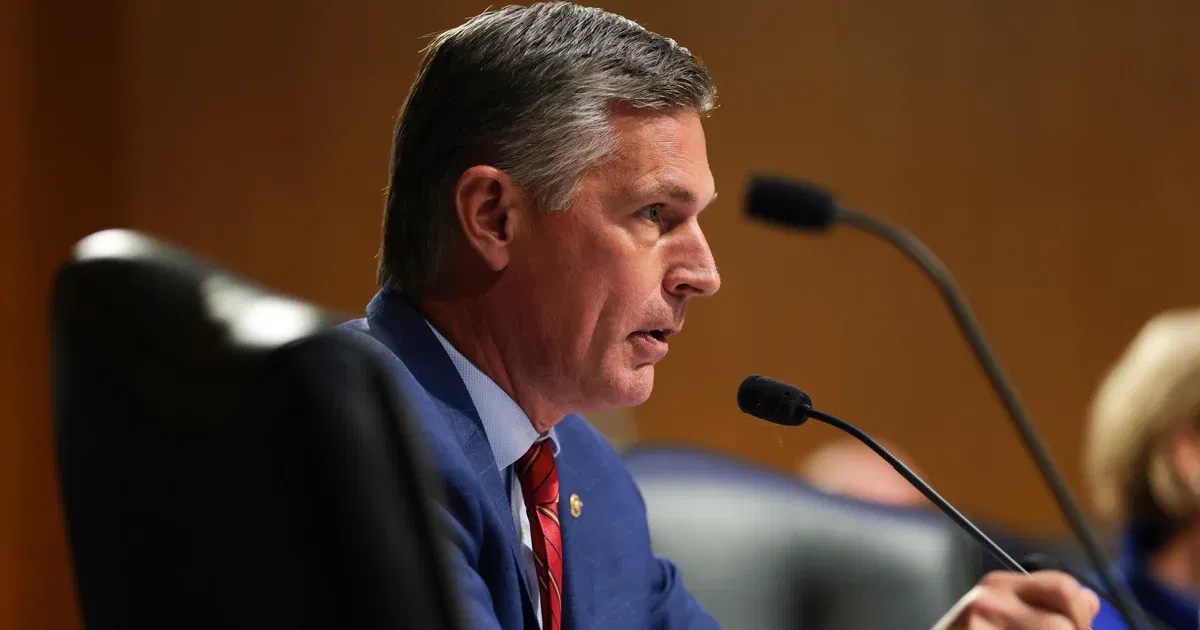
Sen. Jon Husted (R-Ohio), who is running in a competitive re-election race, sought to pass his Senate version by unanimous consent on Thursday. That parliamentary shortcut lets any single lawmaker block the bill. Heinrich, the top Democrat on the Senate Energy and Natural Resources Committee, did exactly that.
"The senator from Ohio and I agree on one thing, AI data centers can mean higher costs for American families, and in a lot of places they already do," Heinrich said. "But the Ratepayer Protection Act falls short of what we need to do to respond."
Heinrich argued the bill lacked enforcement power because states could ultimately choose a different approach, and he called on Congress to "pass real legislation with real teeth." He then pushed his own alternative, the GRID Savings Act, only to see it blocked in turn by Sen. Bernie Moreno (R-Ohio).
Husted, who has faced scrutiny over his past support for data centers, framed the bill as "the most meaningful, bipartisan step Congress could take to protect the American people from higher prices for electricity." After it stalled, he added: "It is a shame that this opportunity has been missed today." Moreno was blunter, telling the chamber that "the term do-nothing Congress exists for a reason. We absolutely accomplished that right now."
Timeline: From a 417-3 House Vote to a Senate Roadblock
The data center bill's journey from broad consensus to procedural deadlock unfolded in a matter of days:
- June 2026: Reps. Evans and Castor introduce the Ratepayer Protection Act; Husted introduces a Senate companion on July 16.
- July 2026: The House Energy and Commerce Committee approves the measure 52-0.
- September 16, 2026: The full House passes the bill 417-3, one of its final votes before lawmakers leave Washington for the midterm campaign.
- September 17, 2026: Husted seeks unanimous consent in the Senate; Heinrich objects, blocking passage and effectively ending momentum before the election.
What the Senate Block Means for Utility, Nuclear and AI Stocks
The stakes for investors are enormous. The AI infrastructure buildout is the largest technology investment cycle since the 1990s internet boom, with hyperscalers such as Microsoft, Amazon, Alphabet, Meta and Oracle collectively committing more than $700 billion to AI data center infrastructure in 2026 alone — a nearly sixfold increase from 2022 levels. That spending has pushed U.S. utility capital investment above $200 billion as grids race to add the generation and transmission capacity these facilities demand.
The blocked bill was the first major federal attempt to answer a simple question that now hangs over the entire sector: who pays for that grid? Under the current framework, the costs of new substations, transmission lines and power plants are often socialized across all ratepayers, including households that never use a watt of AI compute. The Ratepayer Protection Act would have pushed those costs onto the data center operators themselves.
That distinction matters for stock selection. Nuclear-heavy independent power producers such as Constellation Energy (NASDAQ: CEG) and Vistra Corp (NYSE: VST) have already seen substantial multiple expansion by signing long-term power purchase agreements with hyperscalers seeking carbon-free, baseload electricity. Constellation trades near 22.4 times forward one-year earnings, while Vistra sits closer to 14.4 times. The Senate's inaction keeps the near-term status quo — favorable for developers and the independent power producers signing these contracts — but leaves a regulatory overhang that could compress those multiples if a tougher bill with "real teeth" eventually passes.
Data center REITs and utility stocks face a similar trade-off. A more aggressive cost-shifting regime would protect ratepayers and potentially ease political pressure on utilities, but it could also slow the pace of new campus development and thin the margins of operators that pass power costs through to customers. Investors should watch whether state regulators, who retain authority over rates regardless of what Congress does, begin adopting the cost-recovery standard on their own — a move that would matter far more than the federal bill's fate.
Where the Ratepayer Protection Act Stands Now
As of Friday, September 18, the bill is effectively on ice. Senate Democrats have signaled that no significant data center legislation will pass before the midterms, and Politico reports that lawmakers are already jockeying to push competing measures. Heinrich's GRID Savings Act — which would go further by directly preventing Americans from shouldering data center electricity costs — remains in play but faces its own objections from Republicans.
The political backdrop is equally fluid. Affordability and electricity prices are top-of-mind for voters heading into November, and a University of Massachusetts Amherst poll released this week found just 11% of Americans support construction of an AI data center in their own community. That sentiment is pressuring incumbents on both sides of the aisle, from Husted in Ohio to the House Republicans who signed on as cosponsors in recent weeks.
What Happens Next for Data Center Legislation and Investors
Expect the data center energy debate to outlive this week's procedural clash. Even if the Ratepayer Protection Act never returns to the floor, the underlying cost question will be settled in three places investors should monitor: state utility commissions, which could adopt cost-recovery standards on their own; the courts, where behind-the-meter co-location deals between data centers and nuclear plants face legal scrutiny; and the post-election Congress, where a version of cost-shifting legislation is likely to resurface regardless of which party controls the chamber.
For now, the clearest near-term signal is continuity. The developer-friendly status quo persists, hyperscaler capital spending continues to flow, and the utilities and independent power producers supplying that demand keep their current economics. The longer-term risk is that the political pressure Heinrich tapped into only builds, eventually forcing a bill that makes data centers — and their investors — absorb a larger share of the grid costs the AI boom is creating.
The Bottom Line for Investors
- The Senate blocked the Ratepayer Protection Act on Sept. 17, stalling the first major federal effort to make data centers pay for grid upgrades.
- The bill passed the House 417-3 but died on a single senator's objection, and no significant data center legislation is expected before the midterms.
- The near-term status quo favors hyperscalers, utilities and nuclear-heavy power producers like Constellation Energy and Vistra, but keeps a regulatory overhang on the sector.
- The cost question — who pays for the AI grid buildout — will now be decided by state regulators, courts and the next Congress.