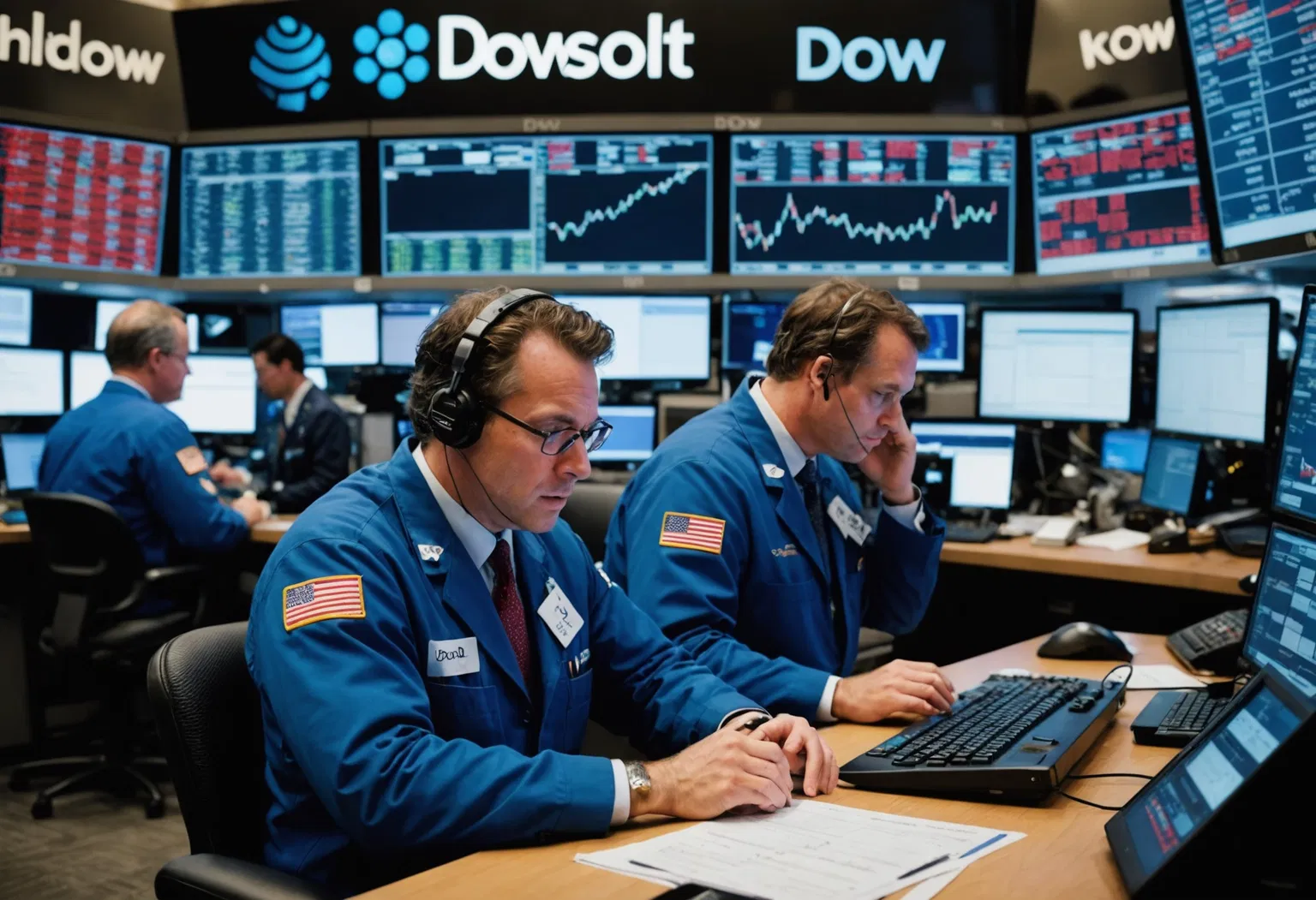
Stocks tumbled on Friday, October 30, 2026, as the stock market's artificial-intelligence trade suffered one of its sharpest setbacks of the year. The Dow Jones Industrial Average fell 572 points, or 1.09%, to close at 51,770.31, while the S&P 500 dropped 1.82% to 7,580.07. The Nasdaq Composite led the decline, sliding 2.86% to about 25,437, after disappointing earnings from Amazon and Intel compounded a selloff that began a day earlier with Alphabet's historic plunge. For investors, the session capped a bruising October that erased more than $2 trillion from the Nasdaq 100 and handed the tech-heavy index its worst month since early 2025.
How the AI Selloff Unfolded: Amazon and Intel Deepen the Rout
The catalyst for Friday's selloff was a pair of earnings reports that struck at the heart of the market's most crowded trade. Intel suffered its worst single-day decline since July 1974, with shares tumbling roughly 29% to 30% after the chipmaker forecast fourth-quarter revenue of $15 billion to $16 billion, below Wall Street's expectations, and revealed that heavy artificial-intelligence spending had driven its free cash flow to negative $2.12 billion. The plunge erased nearly $150 billion in market value, including roughly $12 billion from the U.S. government's stake in the company.
Amazon compounded the pain. The e-commerce and cloud giant's shares fell about 7.2% in pre-market trading after executives reaffirmed plans to keep pouring money into AI data centers and chips. Reuters reported that Amazon, Alphabet, Meta and Microsoft are collectively on track to spend more than $700 billion on artificial intelligence this year, a figure the BBC said is pushing the industry's total AI outlay toward $1 trillion.
The rout actually began Thursday, when Alphabet, Google's parent company, plunged roughly 13%, its worst day on record, after reporting disappointing sales in its core search business. Alphabet shares slipped another 1.4% on Friday. The one-two punch left investors questioning whether the enormous sums flowing into AI will ever generate the profits needed to justify them.
Timeline: How Wall Street's Tech Rout Escalated This Week
The selloff built steadily over two trading sessions:
- Thursday, Oct. 29: Alphabet reports quarterly results, and weak core search revenue sends shares down roughly 13%, the company's worst day ever. Nasdaq futures slump overnight.
- Friday, Oct. 30, pre-market: Amazon falls 7.2% after reaffirming aggressive AI spending, while Intel's weak guidance and cash-burn warning deepen the gloom. Nasdaq futures slide more than 2%.
- Friday, regular session: Losses accelerate into the close. Intel finishes down about 30%, its worst day since 1974, and the Dow gives up 572 points.
- Friday close: The S&P 500 falls 1.82%, breaching its 100-day moving average, and the Nasdaq drops 2.86%, sealing a 5.3% decline for October.
- After the close: The selling spills into Asia, dragging chipmakers including Samsung and TSMC lower.
Why the AI Trade Is Cracking: $700 Billion in Spending, Few Answers
At the center of the market's anxiety is a simple but uncomfortable question: will the artificial-intelligence boom pay off? For most of 2025 and 2026, AI-related companies dominated stock market returns, pushing the Nasdaq to record highs. But the latest earnings reports exposed cracks in that narrative.
Intel's results were particularly stark. The company's decision to keep spending on AI chips even as its free cash flow turned sharply negative reignited fears of a cash-burn problem across the sector. Alphabet's disappointing search revenue, meanwhile, suggested that even the biggest AI beneficiaries are struggling to translate the technology into faster, more profitable growth.
The result has been a broad rotation out of the megacap technology names that led the market higher. Money that had piled into the so-called Magnificent Seven has begun shifting toward cash-flow-rich and defensive sectors, according to weekly market updates. The Dow's relative resilience on Friday, down just over 1% versus the Nasdaq's nearly 3% drop, illustrated the divergence between old-economy blue chips and the technology complex that powered the bull market. The Nasdaq now sits about 7.8% below its all-time closing high, and the Nasdaq 100 lost 6.65% in October alone, erasing more than $2 trillion in market value, according to Deriv's market data. Strategists surveyed by multiple outlets noted that investors are growing increasingly nervous about whether the massive AI spending by tech giants will ever be recouped.
Where Markets Stand Now: Nasdaq Nears Correction Territory
Beyond equities, the risk-off tone rippled through other asset classes. Gold slid to a one-year low, and bitcoin pulled back as traders favored cash and safety over speculative assets. The Dow's 572-point drop was its sharpest in weeks, though the blue-chip index held up better than the tech-heavy Nasdaq thanks to its smaller exposure to the AI trade.
Signs of stabilization emerged over the weekend. U.S. stock futures edged higher on Monday as investors weighed whether the selloff had gone far enough to create buying opportunities, according to Investopedia's early report. Still, with the Nasdaq coming off its biggest monthly decline since early 2025, sentiment remained fragile.
What Happens Next: Key Levels and Events to Watch
Investors will be watching several catalysts in the days ahead. Remaining earnings reports from large technology and semiconductor companies will test whether the AI spending concerns are isolated or systemic. Economic data, including inflation and jobs figures, will shape expectations for interest rates, which have pressured richly valued tech stocks. Market watchers are also monitoring whether the Nasdaq's slide toward correction territory, defined as a 10% decline from its high, triggers further selling or attracts bargain hunters.
For now, the dominant theme is uncertainty: Wall Street is still trying to determine whether October's rout was a healthy reset in an overheated trade, or the start of a more sustained unwind in the market's most important sector.
The Bottom Line: Key Takeaways for Investors
- The Dow fell 572 points (1.09%) to 51,770.31, the S&P 500 dropped 1.82% to 7,580.07, and the Nasdaq slid 2.86% on Friday, Oct. 30, 2026.
- Intel had its worst day since 1974, falling roughly 30% after weak guidance and AI-driven cash burn, while Amazon dropped on heavy AI spending plans.
- Alphabet's 13% plunge Thursday, its worst day ever, set the selloff in motion on disappointing search revenue.
- The Nasdaq fell 5.3% in October, its worst month since early 2025, with the Nasdaq 100 erasing more than $2 trillion in value.
- Big Tech is on track to spend over $700 billion on AI this year, raising doubts about whether the spending will ever pay off.