Tesla (TSLA) delivered a first-quarter earnings beat on Wednesday that would typically send a stock soaring — but investors instead sent shares tumbling as Elon Musk unveiled a capital spending plan that could hit $25 billion this year, raising fresh alarms about cash burn at the electric vehicle maker.
Shares of Tesla fell roughly 3% in after-hours and premarket trading following the Q1 2026 report, erasing an initial 5% surge that came after the company posted adjusted earnings of $0.41 per share — well above the $0.36 consensus estimate. Revenue climbed 16% year-over-year to $22.39 billion, though it narrowly missed the $22.64 billion Wall Street had expected. The mixed reaction encapsulated the growing divide between Tesla's improving operational performance and the mounting cost of Musk's ambitious vision for the company's future.
Inside Tesla's Q1 Beat: Profits Rise, But Spending Looms Large
Tesla reported net income of $477 million for the quarter, up 17% from the same period last year, as automotive revenue surged 16% on improving delivery volumes. The company has rebounded from a difficult 2025 when sales slumped amid boycotts tied to Musk's political involvement and intensifying competition from Chinese and European rivals. Last year, Tesla lost its crown as the world's largest EV maker to China's BYD.
Yet the headline numbers masked a deeper concern. Tesla's capital expenditure in Q1 alone hit $2.5 billion — a 67% increase from the same quarter last year — and CFO Vaibhav Taneja made clear this was just the beginning. The company now expects full-year 2026 capex to exceed $25 billion, up sharply from the $20 billion forecast just three months ago and roughly three times last year's spending level.
"Full-year capex has been raised again to $25 billion from $20 billion," noted Mamta Valechha, an analyst at Quilter Cheviot. "This implies a significant step-up in spending, around three times last year's level, with Tesla likely to burn cash for the rest of the year." The warning sent shivers through the market, and the stock quickly reversed its initial post-earnings gains.
Timeline: How Tesla's Earnings Rollercoaster Unfolded
April 22, 4:00 PM ET — Tesla releases Q1 2026 results after the closing bell. Adjusted EPS of $0.41 beats the $0.36 consensus; revenue of $22.39B slightly misses. The stock jumps 4-5% in after-hours trading.
April 22, 5:30 PM ET — Earnings call begins. Musk and CFO Taneja outline plans to boost 2026 capex to over $25 billion, up 25% from the previous forecast of $20 billion. Taneja warns the spending surge will result in negative free cash flow for the remainder of the year.
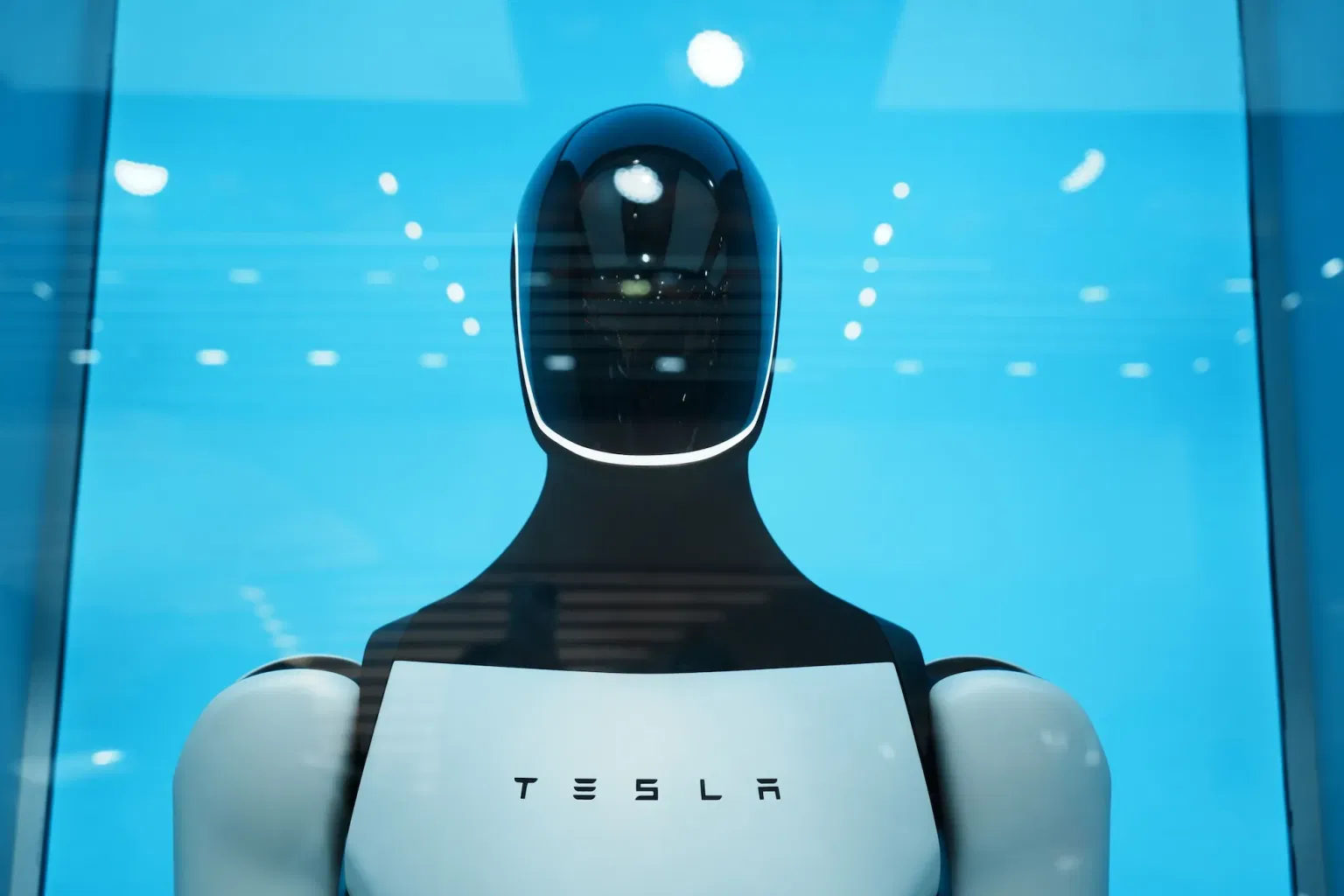
April 22, 6:45 PM ET — Musk unveils plans for a massive Optimus robot factory in Texas with potential annual capacity of 10 million units, calls Optimus "probably the biggest product ever." Stock begins to slide.
April 22, 7:30 PM ET — Tesla shares give up all gains and turn negative.
April 23, Pre-market — TSLA opens down approximately 3.83% as analysts digest the implications of the capex increase. J.P. Morgan reiterates its bearish stance, warning of a potential 60% crash.
Why the $25 Billion Capex Plan Changes Everything for Tesla Investors
The central question for Tesla investors has shifted from "Can Tesla sell enough cars?" to "Can Musk's vision pay off before the cash runs out?" The $25 billion spending plan — directed at AI infrastructure, self-driving taxis, autonomous trucks, and the Optimus humanoid robot — represents a fundamental transformation of Tesla from automaker to artificial intelligence and robotics conglomerate.
"Tesla's physical AI ventures, such as robotaxi and Optimus, offer large potential revenue opportunities, but commercialisation still looks some way off, with timelines once again pushed further out," Valechha cautioned. Indeed, while Tesla reported that robotaxi miles doubled in Q1 compared to Q4 of last year, the services remain limited to San Francisco and three Texas cities, including Austin where Tesla is headquartered.
On the earnings call, Musk made his priorities clear. The company has begun producing its Cybercab — a vehicle with no pedals or steering wheel. A new manually driven Roadster sports car could be unveiled within the next month. But the centerpiece of his presentation was the Optimus humanoid robot, for which Tesla plans a dedicated factory at Gigafactory Texas with a long-term capacity target of 10 million units per year.
"I think Optimus will be our biggest product," Musk said, "not just Tesla's biggest product ever, but probably the biggest product ever." The bold claim underscores the extent to which Musk is betting the company's future — and its cash flows — on robotics and AI.
Not all analysts are convinced. J.P. Morgan has reiterated a bearish outlook, pointing to a "broad deterioration in consensus expectations" across key financial metrics even as the stock has moved higher. The firm sees as much as 60% downside from current levels. Meanwhile, Cantor Fitzgerald reaffirmed an Overweight rating, suggesting the long-term potential justifies the near-term spending. Jefferies maintained a Neutral rating, noting the earnings beat was positive but the spending outlook clouds the picture.
Where Tesla Stock Stands Now: The Market Digests the News
As of April 23, TSLA shares were trading in the $352-$371 range, down from pre-earnings levels and approaching the lower end of the stock's 52-week range of $244.43 to $498.83. The stock has been on a multi-week losing streak, reflecting broader concerns about valuation, competition, and now — spending discipline.
Tesla's market capitalization remains above $1 trillion despite the pullback, supported by a price-to-earnings ratio that still exceeds 360 — a valuation that reflects expectations for future growth from AI and robotics rather than traditional automotive earnings. The company's cash position strengthened to $41.6 billion during Q1, providing a buffer, but analysts warn that the $25 billion capex plan will quickly erode that cushion.
What Happens Next: The Road Ahead for TSLA Investors
The coming quarters will test whether Musk's bet can sustain investor confidence. Key milestones to watch include the expansion of robotaxi services to additional cities, the unveiling of the new Roadster, progress on Optimus production at the Fremont pilot line (converted from Model S and X production), and the commencement of construction on the Texas Optimus factory. Public sales of Optimus robots are targeted for the end of 2027 at a price point of $20,000 to $30,000 per unit.
For traders, the Q1 earnings episode highlighted a new reality: Tesla's stock no longer moves on traditional automotive metrics alone. As CNBC noted ahead of the report, "Tesla earnings don't really matter to the stock anymore" — what matters is the narrative around AI, autonomy, and Musk's ability to deliver on his most ambitious promises. The $25 billion capex plan is the price tag on that bet, and investors are still deciding whether it's a bargain or a burden.
The Bottom Line: Key Takeaways from Tesla's Q1 Report
- Earnings beat: Tesla posted adjusted EPS of $0.41, beating estimates by $0.05, with revenue up 16% YoY to $22.39 billion.
- Capex shock: Full-year 2026 capital spending raised to $25+ billion, up from $20 billion, implying negative free cash flow for the rest of the year.
- Stock reversal: TSLA initially surged 5% after hours but closed down 3-4% as spending concerns overshadowed the earnings beat.
- AI pivot: Musk is betting heavily on Optimus robots, Cybercabs, and robotaxis — with a Texas factory targeting 10 million robots per year.
- Mixed analyst views: J.P. Morgan warns of 60% downside; Cantor Fitzgerald remains Overweight; consensus remains a cautious "Buy" with a $397 price target.