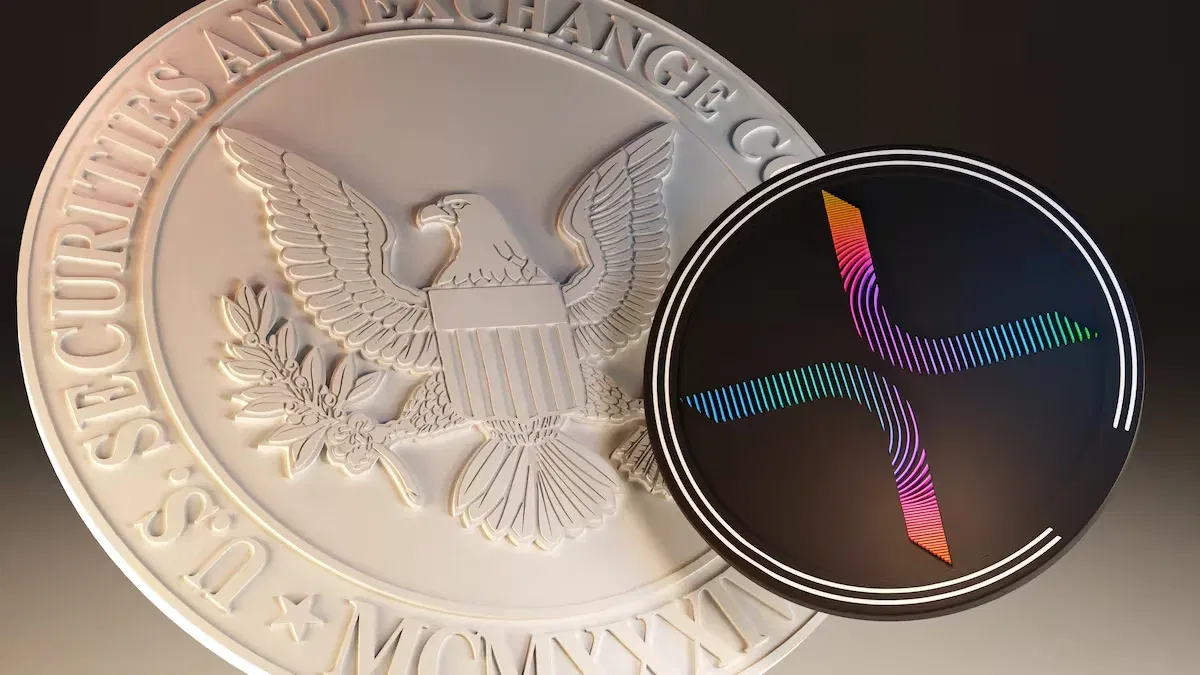
XRP, the cryptocurrency powering Ripple's payment network, is making headlines again with a 7% price surge that has investors and analysts buzzing. The sudden rally, which pushed XRP to $2.74 on February 19-20, 2025, comes on the heels of two major regulatory developments: Brazil's approval of the world's first spot XRP exchange-traded fund (ETF) and the U.S. Securities and Exchange Commission's acknowledgment of multiple XRP ETF filings from major financial institutions. These events signal a potential turning point for XRP, which has faced years of regulatory uncertainty and legal battles with the SEC.
How Brazil's Historic XRP ETF Approval Unfolded
Brazil's securities regulator, the Comissão de Valores Mobiliários (CVM), gave the green light to the Hashdex Nasdaq XRP Index Fund, marking the first spot XRP ETF to receive regulatory approval anywhere in the world. The fund, managed by Genial Investimentos, is expected to begin trading on Brazil's B3 exchange soon, though an official launch date hasn't been announced. This groundbreaking development provides institutional and retail investors with a regulated vehicle to gain exposure to XRP without directly purchasing the cryptocurrency—a significant milestone that could attract substantial new capital to the XRP ecosystem.

"XRP is a natural choice for an ETF due to its real-world utility, growing institutional demand and its overall market cap," Silvio Pegado, Managing Director of Ripple in Latin America, told Portal do Bitcoin. The approval comes at a crucial time for XRP, as the cryptocurrency has been trading in a consolidation pattern since late November 2024. The ETF news provided the catalyst needed to break through key resistance levels, with XRP's price jumping from an opening of $2.5590 to close at $2.7408 on February 19—a clear demonstration of how regulatory clarity can drive immediate market reactions.
Timeline: The Road to XRP ETF Recognition
The path to XRP's current regulatory momentum has been building over several weeks. On February 14, 2025, the SEC acknowledged Grayscale's XRP and Dogecoin ETF filings—a routine but significant step in the regulatory process that indicated the agency was seriously considering these applications rather than immediately dismissing them as in previous years. This acknowledgment came amidst what Bloomberg Intelligence analyst Eric Balchunas described as a "flood of applications" for altcoin ETFs, with issuers submitting proposals for XRP, Solana, Dogecoin, and Litecoin ETFs.
Just five days later, on February 19, Brazil's CVM approved the Hashdex XRP ETF, creating immediate bullish momentum that pushed XRP to outperform all other major cryptocurrencies. By February 20, XRP had reached a market capitalization of $157 billion following the SEC's acknowledgment of additional XRP ETF filings from 21Shares, Bitwise, and CoinShares. This sequence of events highlights how regulatory developments in different jurisdictions are creating a domino effect of positive sentiment for XRP and other altcoins.
Why XRP's Regulatory Breakthrough Matters for Investors
The significance of these developments extends far beyond short-term price movements. For years, XRP has been embroiled in a legal battle with the SEC that began in late 2020 under former chair Gary Gensler. The case, which alleges that Ripple offered XRP as unregistered securities, has created substantial uncertainty for investors and institutions alike. The recent ETF approvals and acknowledgments suggest a shifting regulatory landscape, particularly following Donald Trump's reelection and his administration's promises to bring more clarity to crypto regulations.
Bloomberg Intelligence analysts Eric Balchunas and James Seyffart have quantified the probability of various altcoin ETF approvals, giving Litecoin a 90% chance of approval, Dogecoin 75%, Solana 70%, and XRP 65%. These odds reflect both the regulatory environment and each cryptocurrency's fundamental characteristics. "That's [a] good sign in the case as these altcoins, which in [the] past have been told to withdraw right after filing, bumps up slightly our—already pretty good—odds of approval," Balchunas noted on X.
For XRP specifically, the Brazil ETF approval serves as a validation of its utility and market position. Unlike many cryptocurrencies designed primarily as stores of value or platforms for smart contracts, XRP was built specifically for fast cross-border payments and liquidity management. This real-world use case, combined with Ripple's growing network of partnerships with financial institutions like Santander and American Express, creates a compelling investment thesis that's now becoming more accessible through regulated products.
Where Things Stand Now: XRP's Current Market Position
As of late February 2025, XRP is trading around $2.68 after a slight correction from its recent high of $2.74. Despite this pullback, the cryptocurrency remains close to its November highs and has significantly outperformed Bitcoin and Ethereum over the past 24 hours, with a 4.6% gain compared to Bitcoin's 1.2% and Ethereum's 0.5%. Technical analysis reveals that XRP is currently battling resistance at the $2.84 level—a price point that served as local resistance on February 14.
Key support levels to watch include $2.28 (38.2% Fibonacci retracement) and a crucial zone between $1.80 and $1.50 where the 200-day exponential moving average and 61.8% Fibonacci retracement converge. Analysts suggest that any moves toward this support zone could present buying opportunities, while a break above current resistance could open the door for a move toward $3.35—the yearly high tested in early January 2025.
What Happens Next: The Road Ahead for XRP
The coming months will be critical for XRP as investors watch for several key developments. First, the launch date for Brazil's Hashdex XRP ETF will provide insight into institutional demand for the product. Second, the SEC's decisions on the pending U.S. XRP ETF applications will either validate or temper the current bullish sentiment. Prediction markets on Polymarket currently put the odds of a U.S. XRP ETF approval by December 2025 at 81%, reflecting considerable optimism among traders.
Price predictions for XRP vary widely but generally point to continued growth. For 2025, forecasts range from $3 to $5.40, with Cryptopolitan predicting the highest target. Looking further ahead to 2030, projections become more divergent, ranging from $8.37 (Priceprediction.net) to $48.03 (Telegaon). These varying outlooks reflect different assumptions about regulatory outcomes, adoption rates, and overall market conditions.
The Bottom Line: Key Points to Remember
- Brazil has approved the world's first spot XRP ETF, managed by Hashdex and expected to trade on the B3 exchange.
- XRP surged 7% following the announcement, outperforming Bitcoin and Ethereum over the same period.
- The SEC has acknowledged multiple XRP ETF filings, with Bloomberg analysts giving XRP ETF approval odds of 65%.
- Regulatory shifts under the Trump administration are creating a more favorable environment for cryptocurrency ETFs.
- Technical analysis suggests key support at $2.28 and resistance at $2.84, with potential for movement toward $3.35 if resistance breaks.
- Long-term price predictions for 2025 range from $3 to $5.40, with more speculative 2030 forecasts reaching as high as $48.
For investors, the recent developments represent a significant reduction in regulatory uncertainty—historically one of the biggest barriers to institutional adoption of XRP. While risks remain, including the ongoing SEC lawsuit and competition from newer payment networks, the combination of ETF approvals, growing institutional interest, and clear real-world utility positions XRP for potentially substantial growth in the coming years. As always, investors should conduct their own research, consider their risk tolerance, and maintain a diversified portfolio when approaching cryptocurrency investments.