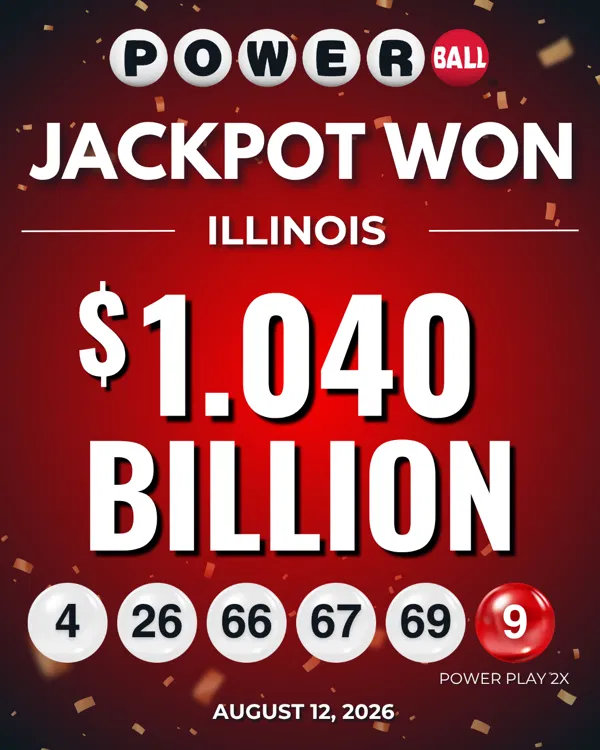
A single Powerball winner in Illinois is waking up a billionaire after matching all six numbers in Wednesday's August 12 drawing to claim a $1.040 billion jackpot — the eighth-largest prize in Powerball history. The winning ticket was sold at a Hy-Vee Fast & Fresh at 310 N. 36th St. in Quincy, and it matched white balls 4, 26, 66, 67, and 69 plus the red Powerball 9. Before the celebration fades, the winner faces a decision that will shape the family's finances for generations: take the $450.5 million cash value now, or accept the full $1.04 billion as an annuity spread over 30 graduated payments across 29 years. Both figures come before taxes, and the choice cannot be reversed. For investors and financial planners watching closely, this windfall is a live case study in managing sudden wealth.
How the $1.04 Billion Jackpot Landed in Quincy
The August 12 drawing capped the 44th consecutive rollover since the jackpot was last won on May 2, making it the largest Powerball prize awarded so far in 2026 and the second-largest lottery prize in Illinois history. The run began at just $20 million and climbed for months, fueled in part by an expanded player base — this was the first jackpot sequence to include players from the United Kingdom after Powerball sales launched there on July 21, 2026.
“For more than three decades, Powerball has shown that a winning ticket can be sold anywhere the game is played, giving every $2 ticket the chance to change not only a winner’s life, but generations to come,” said Stephen Durrell, Chair of the Powerball Product Group and Executive Director of the Kansas Lottery.
The lucky retailer will not go empty-handed: Hy-Vee Fast & Fresh receives a $500,000 bonus for selling the ticket. Meanwhile, more than 3 million tickets won smaller cash prizes in the same drawing. Four tickets — sold in Arizona, California, Florida, and North Carolina — matched all five white balls for the $1 million Match 5 prize, and a fifth ticket in Massachusetts doubled that to $2 million by adding the $1 Power Play option.
Illinois Lottery Director Harold Mays framed the win as a community event. “Every Powerball ticket purchased during this jackpot run also helped generate funding for Illinois public schools,” he said. Since the run began on May 4, Illinois players bought more than $53.8 million in Powerball tickets, generating over $21.5 million for the state’s Common School Fund, which supports K-12 education.
From $20 Million to $1 Billion: Inside the Jackpot Run
The milestone path behind this winner shows just how quickly a jackpot can snowball once it crosses into nine-figure territory:
- May 2: The jackpot is last won — a $20 million prize split between Florida and Texas.
- July 21: Powerball launches ticket sales in the United Kingdom, expanding the player pool.
- July 24: The prize reaches $600 million, the largest of 2026 at the time.
- August 11: Officials raise the advertised jackpot to $1.0 billion ahead of Wednesday’s drawing.
- August 12: A single Quincy ticket matches all six numbers to win $1.040 billion.
- August 15: The jackpot resets to $20 million for Saturday’s drawing.
The $1.040 billion total now ranks eighth on the all-time Powerball list, behind the $2.04 billion record set in California in November 2022. It also trails the $1.337 billion Mega Millions jackpot claimed in Illinois in July 2022, which remains the state’s largest lottery prize.
Lump Sum vs. Annuity: The $450 Million Decision
The single most important financial choice the winner will make is how to receive the money. The advertised $1.04 billion assumes the annuity option, paid in 30 graduated payments over 29 years. The alternative is the cash option — $450.5 million, or roughly 43% of the headline figure — paid all at once. The choice is made once, at the time of claim, and cannot be changed later.
Taxes eat into both paths. Lottery winnings are ordinary income, and a jackpot this size lands squarely in the top federal bracket of 37%. The IRS requires 24% withholding at the source, with the remaining balance due at filing time. Illinois also taxes winnings at a flat 4.95% state rate. A rough back-of-the-envelope estimate puts the lump sum around $260 million after federal and Illinois taxes — before any professional tax planning, deductions, or credits.
The annuity, by contrast, delivers the full advertised total but spreads it out, with each payment increasing 5% per year to blunt inflation. The first check is far smaller than the last, and only the money actually received in a given year is taxed, which smooths the bracket impact over three decades. The trade-off is control: annuity payments follow a fixed schedule, cannot be accelerated, and pass to the estate or named beneficiaries if the winner dies.
Most financial experts lean toward the lump sum for one reason — flexibility. A cash windfall invested at even a modest market return can outgrow the annuity’s guaranteed total over the same period, and it lets the winner build a diversified portfolio, fund a business, or structure an estate immediately. The annuity’s advantage is behavioral: it protects against overspending and guarantees income for nearly 30 years, which can be the safer choice for a risk-averse or inexperienced winner.
The Adviser’s Playbook for Sudden Wealth
Beyond the payout math, wealth managers offer a consistent playbook for anyone hit with sudden money — and it starts before the ticket is even claimed. The Illinois Lottery is urging the ticket holder to sign the back of the ticket immediately and store it somewhere secure. Winners have one year from the drawing date to claim, which buys valuable time to plan.
The first hire should be a team: a fee-only financial advisor, a CPA or tax attorney, and an estate attorney. Because Illinois is among the states that permit winners to shield their identity, claiming through a trust or an attorney can protect the winner’s privacy while keeping the tax treatment identical. There is no tax break from a trust — only privacy — but for a new billionaire that privacy is often priceless.
Advisers also caution against gifts and promises. Splitting winnings with family does not split the tax bill: if the winner is the sole ticket holder, they owe tax on 100% of the prize. Gifting afterward triggers gift-tax rules, with only the annual exclusion — about $19,000 per recipient — passing automatically tax-free. Charitable strategies such as a charitable remainder trust can create an income stream plus a deduction, but they require planning before the claim is finalized.
Where the Illinois Winner Stands Now
As of the August 13 announcement, the winner had not yet come forward — typical for prizes of this size, as legal and financial teams are quietly assembled first. The next drawing on Saturday resets the jackpot to $20 million, and the Power Play 10X multiplier returns because the advertised prize has fallen below $150 million.
The winner’s identity — and whether they choose the $450.5 million lump sum or the $1.04 billion annuity — may not be known for weeks or even months. Illinois law gives the holder a full year to claim, and history suggests most winners of this magnitude take the cash.
What Comes Next for the Quincy Winner
The path from ticket to bank account is methodical. The winner must validate the ticket, choose a payment option, and complete the claim — a process the Illinois Lottery says can be handled at authorized retailers or online. If the winner remains anonymous, the public may never see a name, only a sum.
From there, the real work begins: establishing trusts, structuring investments across stocks and bonds, planning for estate taxes, and setting a sustainable withdrawal rate. Sudden wealth carries a documented risk — a substantial share of lottery winners end up in financial distress within a few years — which is exactly why the advisory team, not the jackpot, ultimately determines whether this windfall lasts generations.
Key Takeaways for Any Sudden Windfall
- The $1.040 billion Powerball jackpot was won by a single ticket in Quincy, Illinois — the game’s eighth-largest prize ever.
- The winner must choose between a $450.5 million lump sum and a $1.04 billion annuity, and the decision is permanent.
- After the 37% federal top rate and Illinois’ 4.95% state tax, the lump sum nets roughly $260 million before planning.
- Experts urge signing the ticket, staying anonymous where allowed, and hiring a fee-only advisor, CPA, and attorney before claiming.
- The annuity protects against overspending; the lump sum offers flexibility and long-term investment upside.