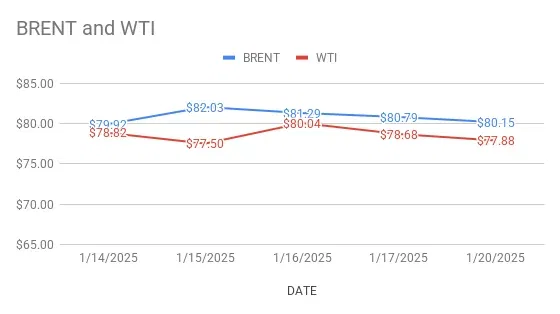
Crude oil prices have experienced significant volatility in early 2025, with Brent crude futures surging to a four-month high of $81 per barrel by mid-January—an $8 increase from December levels—as geopolitical tensions and supply constraints reshape the global energy landscape. This latest price movement comes amid a complex interplay of factors including US sanctions on Russian tankers, OPEC+ production adjustments, and shifting demand forecasts that have created both opportunities and risks for investors. With the International Energy Agency (IEA) reporting Brent's climb to $81/bbl and Goldman Sachs projecting a $70-$85 trading range for the year, understanding these dynamics has never been more crucial for those navigating the commodities market.
How Crude Oil Prices Reached Their Highest Point in Months
The rally that pushed Brent crude to $81 per barrel in mid-January 2025 didn't happen overnight. According to the IEA's January Oil Market Report, benchmark crude oil prices rallied in early January as US sanctions on Iran and Russia intensified and freezing temperatures swept across key producing regions. This combination of geopolitical pressure and weather-related supply constraints created the perfect storm for price appreciation. Simultaneously, Rigzone reported that crude was climbing amid reports that the US might unveil a broader sanctions package targeting Russian tankers, further tightening global supply.

Market participants witnessed Brent crude futures hit a four-month high of $81/bbl by mid-January, up $8/bbl from a month earlier. This sharp increase followed what the IEA described as a "relatively mild start to the winter," suggesting that the rally caught many analysts by surprise. The price movement represented a significant rebound from December's average of $73.86 per barrel, which had been the lowest monthly average in two years according to Infinity Galaxy's market analysis.
Timeline: How Crude Oil Prices Developed in Early 2025
The crude oil price story of early 2025 unfolded through several distinct phases. In December 2024, Brent crude oil prices reached $73.86 per barrel—the lowest monthly average in the previous two years according to Infinity Galaxy data. This low point set the stage for the dramatic reversal that would follow in January.
January 2, 2025, saw oil prices rise at the start of the new year as demand optimism prevailed, with OilPrice.com reporting that total crude oil and petroleum products supplied reached their highest volume since the pandemic. By January 7, however, CNBC reported that oil prices extended losses as firmer dollar and supply outlook weighed on markets, highlighting the inherent volatility. The critical turning point came around January 10, when Rigzone documented rising prices due to potential US sanctions on Russian tankers.
Mid-January brought the peak: Brent crude futures hit that four-month high of $81/bbl according to the IEA. The rally continued through late January, though Reuters reported on January 24 that oil prices settled pennies higher but were down for the week as the prospect of Trump pushing up crude supplies created uncertainty. This sequence of events demonstrates how rapidly market sentiment can shift in response to geopolitical and economic developments.
Why Crude Oil Prices Matter: Expert Analysis and Market Impact
The significance of crude oil's January 2025 rally extends far beyond simple price movements. Goldman Sachs Research provides crucial context, forecasting that Brent will trade in a range of $70-$85 per barrel throughout 2025 and will average about $76. According to their analysis published January 9, prices will be heavily influenced by the rate of geopolitical developments and supply adjustments. This forecast suggests that while the January spike was notable, it remained within expected parameters for sophisticated market observers.
The IEA's analysis adds another layer, noting that following a relatively mild start to the winter, Brent's surge to $81/bbl reflected tightening supply conditions rather than runaway demand growth. This distinction matters greatly for investors: supply-driven price increases tend to be more volatile and potentially shorter-lived than demand-driven rallies. Meanwhile, Rigzone's reporting on January 10 emphasized that crude's climb was specifically tied to reports of broader US sanctions targeting Russian tankers—a geopolitical factor that could have lasting implications for global trade patterns.
Market impacts extend across multiple sectors. Higher crude prices lift fuel costs and push up headline inflation, creating challenges for central banks and consumers alike. For households already facing cost-of-living pressures, sustained oil price increases can be felt directly at the gasoline pump and indirectly through higher transportation costs for goods. For investors, these price movements create opportunities in energy stocks, commodities futures, and related sectors, but also introduce volatility that requires careful risk management.
Where Things Stand Now: Latest Developments in Crude Oil Markets
As of late January 2025, crude oil markets remain in a state of careful balance. Reuters reported on January 24 that Brent crude futures settled up 21 cents, or 0.27%, to $78.50 a barrel, while U.S. West Texas Intermediate crude (WTI) settled up 4 cents, or 0.05%, to a slightly lower level. These marginal gains followed a week of declines, illustrating the market's uncertainty about future supply trajectories.
The current situation reflects competing narratives: on one side, OPEC+ production adjustments continue to influence global supply. AA.com.tr reported that OPEC crude oil production was down 135,000 barrels per day in January, contributing to tighter market conditions. On the other side, potential increases in US production and the prospect of expanded supplies under certain political scenarios create downward pressure. CNBC's January 7 reporting highlighted how firmer dollar conditions and supply outlook concerns weighed on prices earlier in the month, demonstrating that multiple factors remain in play.
TradingEconomics provides additional context with its data showing crude oil rose to 111.54 USD/Bbl on April 2, 2026—a forward-looking perspective that suggests continued volatility ahead. Their analysis indicates that over the past month, crude oil's price has risen 49.60%, and is up 66.60% compared to the same time last year, though these figures represent contract-for-difference trading rather than physical market prices.
What Happens Next: The Road Ahead for Crude Oil Prices
The future trajectory of crude oil prices depends on several key variables that investors should monitor closely. Goldman Sachs' $70-$85 range for Brent crude throughout 2025 provides a useful framework, but within that range, significant volatility is likely. The investment bank emphasizes that prices will be heavily influenced by geopolitical developments—particularly regarding US sanctions policy and OPEC+ production decisions.
Several specific factors will shape coming months: First, the implementation and potential expansion of US sanctions on Russian tankers could further constrain global supply. Second, OPEC+'s production management decisions—including whether to maintain or adjust current output levels—will directly impact market balances. Third, global demand patterns, especially from China and other major economies recovering from economic challenges, will determine whether consumption keeps pace with available supply.
Seasonal factors also matter: the transition from winter to spring typically brings reduced heating demand but increased transportation fuel consumption as travel patterns shift. Weather-related disruptions, which played a role in January's price spike, could reappear during hurricane season or other extreme weather events. For investors, this means maintaining flexibility and staying informed about both fundamental supply-demand dynamics and technical market indicators.
The Bottom Line: Key Points for Investors
Crude oil's January 2025 rally to $81 per barrel represents both opportunity and risk for investors. The key takeaways include:
- Geopolitics Drive Prices: US sanctions on Russian tankers and broader geopolitical tensions have become primary price drivers, often outweighing traditional supply-demand fundamentals.
- Expert Forecasts Provide Guidance: Goldman Sachs' $70-$85 range for Brent crude in 2025 offers a reasonable expectation for where prices might trade, though volatility within that range should be expected.
- Multiple Factors in Play: OPEC+ production decisions, US policy developments, global demand patterns, and even weather conditions all influence crude oil prices simultaneously.
- Investment Implications: Energy sector investments require careful attention to these interconnected factors, with diversification and risk management becoming increasingly important.
- Monitoring is Essential: Regular review of IEA reports, OPEC announcements, and geopolitical developments will be crucial for investors navigating this complex market.
As crude oil markets continue to evolve through 2025, staying informed about these dynamics will separate successful investors from those caught unprepared by sudden price movements. The January rally serves as a reminder that in commodity markets, change is the only constant—and preparation is the best defense.