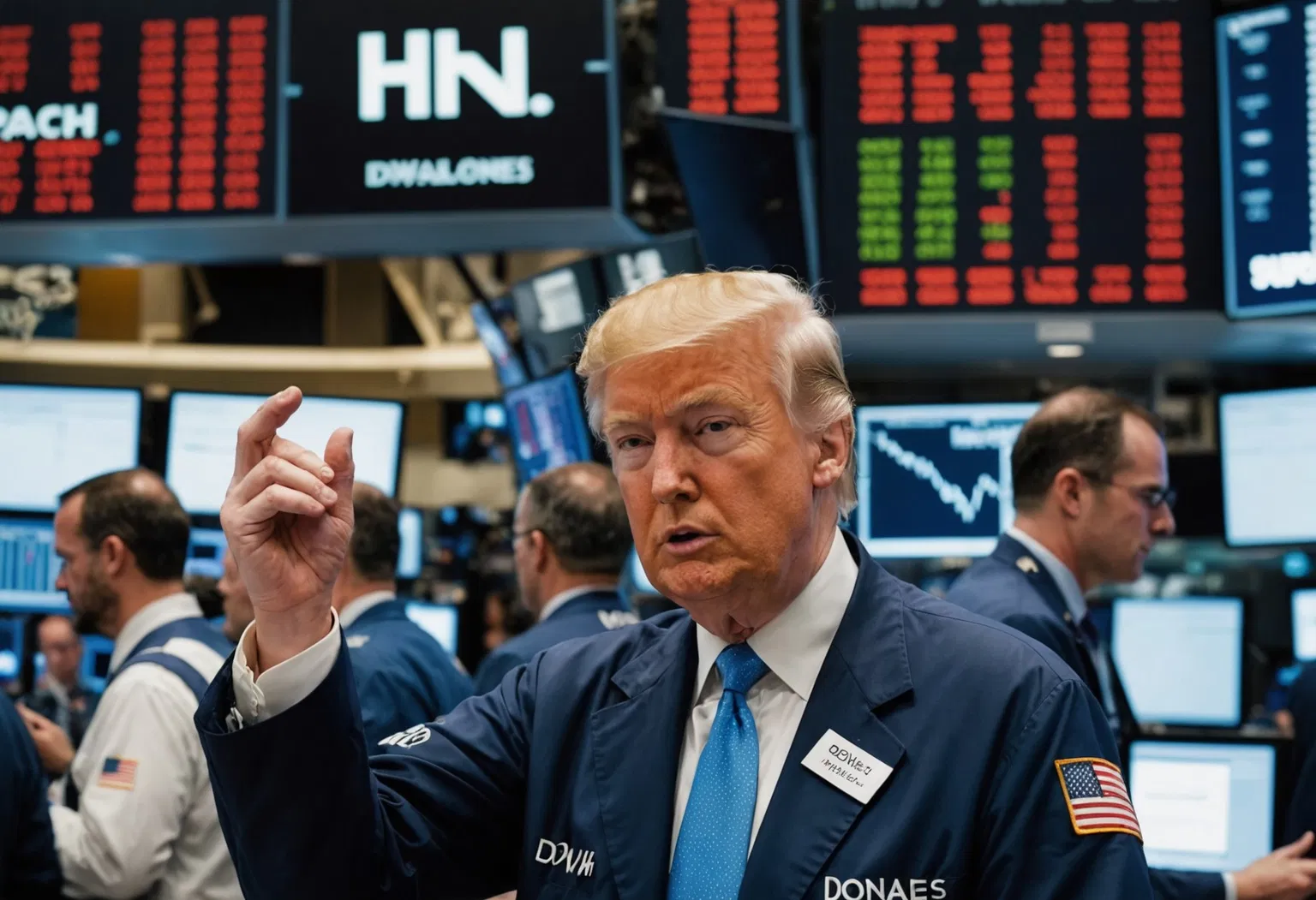
Stock markets tumbled Monday as President Donald Trump ordered a U.S. naval blockade of the Strait of Hormuz, one of the world's most critical oil chokepoints, following the collapse of peace talks with Iran. The dramatic escalation sent Brent crude oil surging back above $100 per barrel and triggered a sell-off in equity futures, with Dow Jones Industrial Average futures plummeting as much as 580 points before paring losses. The move marks the most significant geopolitical market shock since the Russia-Ukraine conflict, raising fears of prolonged energy inflation and broader economic disruption.
How the Hormuz Blockade Unfolded: From Failed Talks to Market Turmoil
The crisis began Sunday when U.S.-Iran peace talks collapsed after 21 hours of negotiations failed to produce a ceasefire agreement. Within hours, President Trump announced via Truth Social that the United States would impose a naval blockade on all Iranian ports and the Strait of Hormuz, effective 10 a.m. ET Monday. "The Iranian regime has left us no choice," Trump declared. "We will not allow them to choke the world's oil supply while they continue their aggression."
Market reaction was immediate and severe. Dow Jones Industrial Average futures (YM=F) plunged 509 points, or 1.06%, in early trading, while S&P 500 E-minis dropped 43.25 points (0.63%) and Nasdaq 100 futures fell 0.64%. The sell-off accelerated as traders digested the implications of a prolonged blockade on global energy flows. "This isn't just another geopolitical headline—it's a direct threat to the global economy's energy arteries," said Rebecca Patterson, former chief investment strategist at Bridgewater Associates, in comments reported by multiple financial outlets.
Timeline: The 48 Hours That Brought Markets to the Brink
The rapid escalation unfolded over a critical two-day period that caught many investors off guard. On Saturday evening, U.S. and Iranian negotiators began what was described as "final attempt" peace talks in Oman. By Sunday afternoon, those talks had collapsed without agreement. At 6:22 p.m. ET Sunday, President Trump posted his blockade announcement on Truth Social. Within minutes, oil futures began spiking in after-hours trading.
By 8:00 p.m. ET, Dow futures had fallen nearly 500 points. At 10:00 p.m. ET, the U.S. Department of Defense confirmed operational details, stating Navy vessels would begin intercepting ships attempting to enter or leave Iranian waters starting at 10 a.m. ET Monday. Asian markets opened sharply lower at 7:00 p.m. ET Sunday (7:00 a.m. Tokyo time), with Japan's Nikkei falling 1.2% and Hong Kong's Hang Seng dropping 0.9%. European markets followed suit at 3:00 a.m. ET Monday, with Germany's DAX down 0.8% and the FTSE 100 declining 0.6%.
Why the Hormuz Blockade Could Reshape Global Markets for Months
The Strait of Hormuz isn't just another waterway—it's the world's most important oil chokepoint. Approximately 20% of global oil supply passes through this narrow passage between Iran and Oman, representing about 21 million barrels per day. A sustained blockade could remove 2-3 million barrels daily from global markets initially, with potential losses mounting to 5 million barrels if the confrontation escalates.
"We're looking at a potential $150 per barrel scenario if this blockade lasts more than a few weeks," warned oil analyst Amrita Sen of Energy Aspects in comments to The Telegraph. Goldman Sachs analysts noted in a research report that Brent crude could average above $100 per barrel throughout 2026 if constraints on Hormuz shipping persist. This would represent a 40% increase from pre-crisis levels and could add 1-2 percentage points to global inflation.
The ripple effects extend far beyond energy markets. Transportation costs would spike, supply chains would face renewed disruption, and central banks would confront the impossible choice between fighting inflation and supporting growth. "The Fed's soft landing narrative just hit a major obstacle," said former Treasury Secretary Larry Summers in an interview with Bloomberg. "Energy-driven inflation could force them to keep rates higher for longer, increasing recession risks."
Where Markets Stand Now: Oil Holds Gains as Stocks Stabilize
As of midday Monday, markets showed tentative signs of stabilization but remained deeply unsettled. Brent crude traded at $101.74 per barrel, up 6.9% on the day, while U.S. West Texas Intermediate crude reached $103.55, a 7.2% gain. Both benchmarks have nearly doubled from their $70 pre-war levels in late February.
Equity markets pared their worst losses but remained in negative territory. The Dow Jones Industrial Average was down 240 points (0.5%) after being down as much as 392 points earlier. The S&P 500 was essentially flat, while the Nasdaq Composite showed modest gains of 0.2% as technology stocks benefited from lower bond yields. Treasury yields fell across the curve as investors sought safety, with the 10-year yield dropping 8 basis points to 4.32%.
"The market's relatively calm response suggests investors see this as a negotiating tactic rather than the start of a prolonged conflict," said Julian Emanuel, chief equity and quantitative strategist at Evercore ISI. "But that complacency could be dangerous if the blockade drags on."
What Happens Next: Expert Predictions and Portfolio Implications
Market strategists are divided on how the situation will evolve, but most agree on several potential scenarios. In the base case (40% probability), analysts expect a negotiated resolution within 2-3 weeks, with oil prices retreating to $90-95 per barrel and equities recovering their losses. In a moderate escalation scenario (35% probability), the blockade lasts 1-2 months, pushing oil to $120-130 and triggering a 5-10% equity correction. The worst-case scenario (25% probability) involves military confrontation and a prolonged closure, sending oil above $150 and stocks into bear market territory.
For investors, several defensive moves make sense in this environment. Energy stocks and commodities provide natural hedges against further oil price spikes. Defense contractors may benefit from increased military spending. Treasury bonds and gold offer traditional safe havens. Meanwhile, sectors most vulnerable to higher energy costs—airlines, shipping, and consumer discretionary—face headwinds.
"This is a classic 'risk-off' environment where diversification matters more than ever," said Cathy Siefert, director of portfolio strategy at Cresset Capital. "Investors should review their allocations to ensure they're not overexposed to any single outcome."
Key Takeaways for Investors Navigating Geopolitical Shockwaves
The Hormuz blockade reminds investors that geopolitical risks can resurface with devastating speed. Several critical lessons emerge from today's market reaction. First, energy security has become a paramount concern for global markets, making traditional diversification less effective. Second, central banks have limited tools to combat supply-driven inflation, creating policy uncertainty. Third, market reactions to geopolitical events tend to be front-loaded, creating opportunities for disciplined investors.
Most importantly, the events underscore why maintaining a long-term perspective remains essential. While today's headlines are alarming, historical patterns show that markets eventually adapt to geopolitical shocks. The 1973 oil embargo, 1990 Gulf War, and 2014 Crimea annexation all triggered initial panic that gave way to recovery within months. Investors who stayed disciplined during those periods were rewarded.
As the situation develops, focus will shift to diplomatic channels and military positioning. For now, markets are pricing in heightened uncertainty—a reality that demands vigilance but not panic from long-term investors.