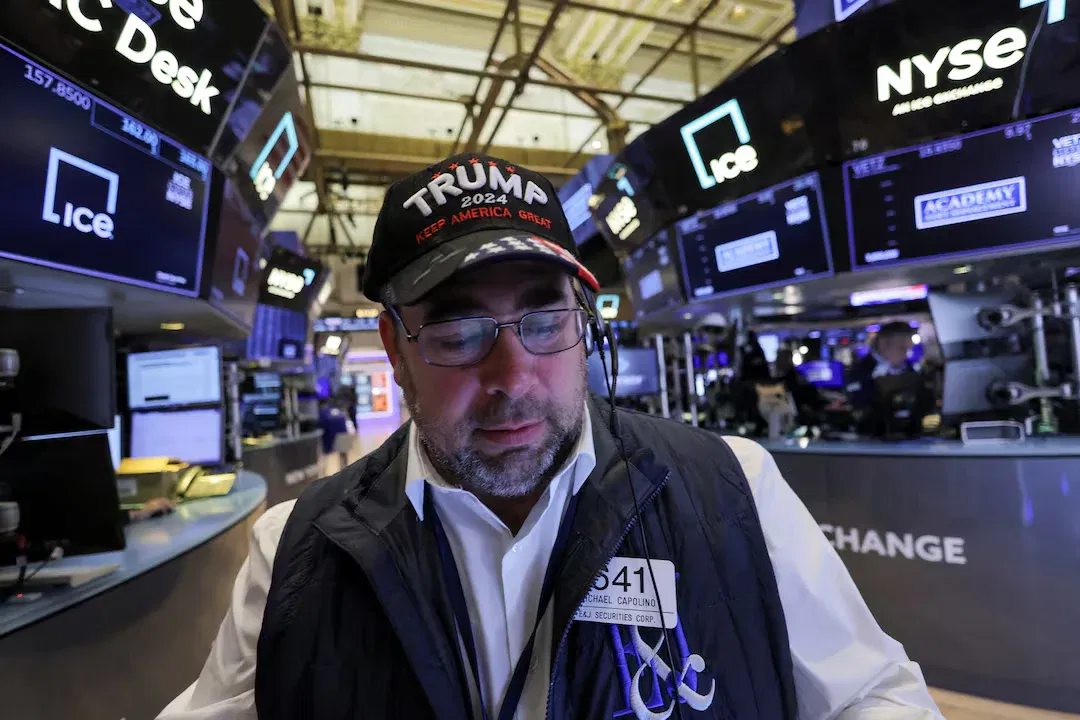
The U.S. stock market is riding an unprecedented wave of record-breaking highs in 2024, with the S&P 500 notching 54 all-time closing highs since January and marking its longest winning streak of the year. This remarkable rally has left many investors wondering: what’s driving this surge, and more importantly, what does it mean for your portfolio in 2025? From strong corporate earnings and AI enthusiasm to political shifts and historical patterns, the forces shaping today’s market could determine tomorrow’s returns.
How the Record-Setting Rally Unfolded: Inside the 2024 Stock Market Boom
The numbers tell a compelling story of market strength. In October 2024 alone, both the S&P 500 and Dow Jones Industrial Average surged to new record highs, sealing six straight weeks of gains—the longest string of weekly advances in 2024 for both indices. The broad market benchmark advanced 0.40% to close at 5,864.67, while the Dow gained 36.86 points to end at 43,275.91. The Nasdaq Composite, led by a post-earnings jump in Netflix, ended the day up 0.63% at 18,489.55.
Behind these numbers lies a robust earnings season. More than 70 S&P 500 companies have reported earnings, with 75% beating expectations according to FactSet data. Netflix climbed 11% after beating Wall Street's earnings and revenue estimates in the third quarter, while reporting a 35% jump in ad-tier memberships. This corporate strength has provided fundamental support for the market's ascent, even as geopolitical tensions and tariff threats loom.

Timeline: How the 2024 Market Rally Developed Month by Month
The path to record highs wasn't linear but followed a clear upward trajectory throughout 2024. The rally began gaining momentum in early spring as inflation showed signs of cooling and the Federal Reserve signaled potential rate cuts. By June, the S&P 500 had already posted 23 record closes. The summer months saw continued strength driven by AI enthusiasm, particularly in technology stocks like Nvidia, which saw shares surge more than 176% year-to-date.
The election season added another layer of complexity. In November, stocks surged to record highs after Republican Donald Trump won the 2024 presidential election. The Dow Industrials rose 1,508.05 points (3.57%), the S&P 500 gained 2.53%, and the Nasdaq Composite jumped 2.95%—all closing at record levels. Financials jumped 6.16% as the best performing sector, with banks expected to benefit from loosening regulations under Trump. The small-cap Russell 2000 rallied 5.84% to a three-year high, its biggest surge since November 2022.
Why This Rally Matters: Expert Analysis and Historical Context
While the current rally feels exhilarating, history offers important context. According to Ned Davis Research, years filled with fresh records have typically led to weaker performance the following year. Since 1928, in years when the S&P 500 has hit more than 35 record highs, the median gain for the benchmark index was just 5.8% the following year, below the long-running average of 8%. In years when the S&P 500 hit at least 50 record highs, the median return was -6% the following year.
"The obvious challenge to momentum studies is that stocks do not go up forever," strategists at Ned Davis Research wrote. "Perhaps AI will drive another productivity and profit boom that will keep inflation and Fed policy benign. History suggests that is the exception rather than the rule." This caution is echoed by other market observers who point to narrow market breadth—with most gains concentrated among a relatively small handful of companies—as a potential vulnerability.

Where Things Stand Now: The Current Market Landscape
As of late 2024, the market continues to show remarkable resilience despite headwinds. The S&P 500 has rallied around 27% since January, on track to post double-digit gains for the second year in a row. Thirty-eight stocks in the S&P 500 traded at new 52-week highs in a single October session, including Netflix trading at all-time-high levels back to its 2002 IPO, McDonald's at highs back to 1965, and General Dynamics at levels not seen since 1952.
However, challenges persist. According to Rob Williams, chief investment strategist at Sage Advisory, "Usually it's the other way around—the market's hesitant, and then it does well after the election. Now we're getting the reverse of it... Maybe you get the opposite of what we had—stocks will be strong into the election and then have some volatility fall on the election." This atypical pattern reflects the unique political and economic dynamics of the current cycle.
What Happens Next: The Road Ahead for Investors in 2025
Looking toward 2025, investors face a complex landscape. The same factors that drove 2024's rally—AI enthusiasm, political expectations, and corporate earnings strength—will continue to evolve. Wall Street is generally feeling bullish on the outlook for equities next year, though most forecasters are expecting more muted returns compared to 2024's spectacular gains.
Several key considerations should guide investment decisions in the coming year. First, diversification becomes increasingly important as market leadership may shift. Second, investors should monitor valuation levels, particularly among large-cap stocks that have driven recent gains. Third, geopolitical risks, including potential trade tensions and election-related volatility, warrant careful attention. Finally, the Federal Reserve's policy path will remain crucial, with any shift in interest rate expectations likely to impact market dynamics.
The Bottom Line: Key Points Every Investor Should Remember
As we navigate this record-breaking market environment, several essential takeaways emerge. First, strong corporate earnings have provided fundamental support for the rally, with 75% of S&P 500 companies beating expectations. Second, historical patterns suggest caution—years with numerous record highs often see weaker subsequent returns. Third, market breadth remains narrow, with gains concentrated in relatively few stocks. Fourth, political and geopolitical factors will continue to influence market direction. Finally, a disciplined, long-term approach that emphasizes diversification and risk management may prove most effective in navigating whatever 2025 brings.
The 2024 stock market rally represents both opportunity and caution. While celebrating current gains, wise investors will prepare for the challenges ahead, remembering that markets move in cycles and that today's records don't guarantee tomorrow's returns. By staying informed, maintaining perspective, and sticking to sound investment principles, investors can position themselves for success regardless of what the future holds.